Why Does Light Challenge Human Intuition?
What Does it Mean to Say a Photon is Timeless?
Why No Reference Frame Exists for a Photon?
How General Relativity Treats Light?
What Does This Mean for Quantum Physics?
Misconceptions About “Timeless Photons”
Future Physics Questions Raised by Light
References and Further Reading
Light occupies a uniquely paradoxical role in physics, simultaneously serving as the fastest messenger in the universe and a phenomenon that, according to relativity, traverses spacetime without experiencing time at all.
 Image Credit: 3d_kot/Shutterstock.com
Why Does Light Challenge Human Intuition?
A photon emitted from a distant galaxy may travel for billions of years before reaching Earth. Astronomers routinely observe light that began its journey long before the formation of the solar system. Yet, according to relativity, no proper time elapses along the photon’s trajectory. In a precise sense, the photon does not experience this journey at all.1
This apparent contradiction highlights a deeper issue: human intuition is built on slow speeds, solid objects, and the steady passage of time. Light operates outside these familiar constraints. It travels at the universal speed limit, c, and in doing so, defines the structure of spacetime itself. Rather than being just another moving object, light occupies a boundary role in physics.1-2
Popular descriptions, however, often blur the line between rigorous physical statements and metaphor. Phrases such as "from the photon's perspective" or "light experiences no time" are widespread, but they are technically misleading. This article explains what physics actually says about photons, what it does not say, and why light occupies the conceptual boundary of relativity.
Keep the PDF of this article for later!
What Does it Mean to Say a Photon is Timeless?
In special relativity, time is not absolute. Instead, each object traces a path through spacetime, and the time measured along that path is called proper time.
ds2 = −c2dt2 + dx2 + dy2 + dz2
For objects with mass, this interval is negative, and proper time accumulates along their trajectories. But for light, something special happens. Photons follow null trajectories, meaning:
ds2 = 0
This implies that the proper time along a photon’s path is zero.
It is tempting to interpret this as meaning that photons are timeless or that emission and absorption occur instantaneously from the photon’s perspective. But this interpretation goes beyond what the mathematics supports.3
First, photons are not observers. They do not possess a rest frame, and relativity explicitly forbids defining one. Second, proper time is a geometric property of spacetime paths, not a measure of subjective experience. Saying that a photon has zero proper time simply means that the spacetime interval along its path vanishes.4
Thus, “timelessness” is a mathematical statement about null intervals, not a claim about perception, simultaneity, or consciousness.
Why No Reference Frame Exists for a Photon?
To understand why we cannot speak of a photon’s perspective, we turn to Lorentz transformations. These describe how space and time coordinates change between observers moving at different velocities. A key quantity is the Lorentz factor:
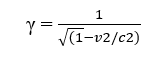
As velocity v approaches the speed of light, γ diverges toward infinity. This has two critical consequences:
- Time dilation becomes infinite.
- Length contraction shrinks distances toward zero.
For massive objects, reaching v = c would require infinite energy, making it physically impossible. Photons, by contrast, are always at c, but they are not obtained by accelerating a massive object to that speed. They are fundamentally different entities.4-5
Because the Lorentz transformation breaks down at v = c, no valid inertial reference frame exists in which a photon is at rest. This is why statements like "what a photon sees" are not just approximations - they are undefined within the theory.4
Importantly, photons are not moving through time more slowly in the same way that astronauts experience time dilation at high speeds. Instead, light defines the causal structure of spacetime. The paths of photons form the light cones that separate events into past, future, and elsewhere. In this sense, light is not merely subject to spacetime; it helps define it.5
How General Relativity Treats Light?
General relativity extends these ideas to curved spacetime. Instead of moving along straight lines, light follows geodesics, which are the shortest paths in a curved geometry.
This leads to several observable phenomena:
- Gravitational lensing: Massive objects bend the path of light, producing distorted or multiple images of distant galaxies.
- Light near black holes: Photons can orbit black holes at the photon sphere or fall past the event horizon.
- Gravitational redshift: Light loses energy when escaping strong gravitational fields, shifting to longer wavelengths.2
These effects demonstrate that light acts as a probe of spacetime curvature. For example, the first confirmation of general relativity came from measuring the bending of starlight during a solar eclipse. Today, gravitational lensing allows astronomers to map dark matter distributions across the universe.2
Modern technologies rely heavily on the behavior of light, from astronomical interferometers to advanced photon detectors and quantum optics systems capable of measurements at the single-photon level.5
Space telescopes observe light across the electromagnetic spectrum to reconstruct cosmic history, while gravitational lensing measurements help constrain cosmological parameters and probe dark energy. Even the imaging of black hole shadows depends entirely on tracking how light behaves in extreme gravitational fields.2
What Does This Mean for Quantum Physics?
In quantum theory, photons are not classical particles traveling along definite paths. They are quanta of the electromagnetic field, described by quantum electrodynamics (QED). In this framework, photons are gauge bosons that mediate electromagnetic interactions.6
This introduces several key ideas:
- Wave-particle duality: Photons exhibit both wave-like interference and particle-like detection.
- Field excitations: A photon is better understood as a localized excitation of a quantum field rather than a tiny object.
- Entanglement: Photons can exhibit correlations across large distances, constrained by relativistic causality.
Despite its success, QED does not fully reconcile with general relativity, leading to fundamental tensions between quantum fields and spacetime geometry.6
Research into quantum gravity, the holographic principle, and causal structure continues to place photons at the center of attempts to unify physics.6
Misconceptions About “Timeless Photons”
Several common misconceptions arise from oversimplified interpretations of relativity: photons do not see the universe instantly; zero proper time does not imply time travel; and massive objects cannot reach light speed because doing so would require infinite energy.3
More broadly, the timelessness of photons is not a physical experience but a mathematical feature of null spacetime intervals.3
Future Physics Questions Raised by Light
Light remains central to some of the deepest questions in physics, defining causal structure in relativity, mediating interactions in quantum theory, and serving as our primary tool for observing the universe.
Modern technologies extend this role, from quantum communication using entangled photons to gravitational-wave observatories detecting spacetime distortions via laser interferometry.1
At a deeper level, understanding null spacetime structure may be key to unifying gravity and quantum mechanics, particularly in debates over whether spacetime is fundamental or emergent.
As both a physical phenomenon and a conceptual boundary, light continues to challenge intuition while guiding scientific progress.
Want to go even further? We explore reality at the smallest scales in this article
References and Further Reading
- Dongfang, X. On the Relativity of the Speed of Light.
- Gao, S. Relativity without Light: A Further Suggestion.
- Fiscaletti, D.; Sorli, A. S. Timeless Space Is a Fundamental Arena of Quantum Processes.
- Annila, A. The Matter of Time.
- Bartlett, S. D.; Rudolph, T.; Spekkens, R. W. Reference Frames, Superselection Rules, and Quantum Information.
- Loudon, R.; Scully, M. O. The Quantum Theory of Light.
Disclaimer: The views expressed here are those of the author expressed in their private capacity and do not necessarily represent the views of AZoM.com Limited T/A AZoNetwork the owner and operator of this website. This disclaimer forms part of the Terms and conditions of use of this website.