Attitude Determination and Control Systems (ADCS) are key to maintaining the precise orientation of CubeSats, microsatellites, and other small satellite platforms.
High-fidelity optical subsystems, such as solar aspect sensors, star trackers, and Earth horizon sensors, serve as the backbone of inertial reference and vector-based navigation solutions in contemporary ADCS architectures.
Optical Sensors in Satellite ADCS Architectures
Optical sensing units employed in spaceflight ADCS offer critical input data for onboard estimators and control algorithms.
Star Trackers
Star tracking systems employ CMOS or CCD focal planes coupled with precision optical assemblies to capture stellar fields before cross-referencing these with onboard star catalogs.
Depending on the system’s thermal stability, optical resolution, and onboard processing capability, this approach allows the capture of sub-arcminute or even sub-arcsecond attitude knowledge.
Sun Sensors
Sun-sensing systems are used for coarse attitude acquisition and Sun vector estimation. These units typically use quadrant photodiodes or linear arrays, positioned behind pinholes or refractive optics, with angular accuracy determined by detector response and optical geometry.
Earth Horizon Sensors
Earth horizon sensors typically operate in the thermal infrared (TIR) band, detecting the radiometric contrast between Earth’s limb and space to derive horizon-crossing angles and nadir-pointing information. These sensors tend to utilize wide-angle optical elements and bandpass filters to improve signal-to-noise ratio and spatial resolution.
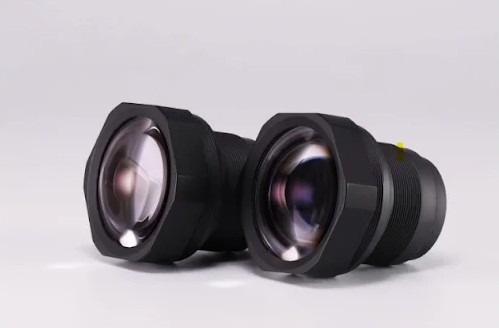
Star Tracker. Image Credit: Avantier Inc.
Optical Subsystems and SWaP-Constrained Platforms
Small satellites require the implementation of strict limitations in terms of Size, Weight, and Power (SWaP). Optical component suppliers are therefore required to design and manufacture miniaturized, thermally stabilized optical subsystems that offer consistent performance under dynamic vibration and thermal loading conditions.
Innovations in folded optical paths, lightweight materials, and monolithic assemblies have allowed considerable reductions in system volume and mass to be achieved with no compromise in measurement accuracy.
Optics in Actuation and Active Pointing
Optical components also play an enabling role in advanced ADCS functions, including:
- Beam steering mechanisms for optical communications and inter-satellite links. These mechanisms depend on high-precision mirror mounts and fast steering mirrors (FSMs) integrated with tracking sensors.
- Photon momentum exchange devices, such as laser-based photon torquers. These devices generate minuscule yet continuous torque, enabling ultra-fine attitude adjustments.
Optical elements used in these applications must offer excellent surface figure accuracy, radiation resistance, and angular stability.
Delivering Space Durability and Sensing Accuracy
Optical component manufacturers address both environmental survivability and sensor fidelity, directly contributing to system-level performance.
Application-Specific Optical Design
Collaborative development of wide-field, low-distortion lenses, custom freeform mirrors, and other mission-specific optics ensures close alignment with the field-of-view, modulation transfer function (MTF), and other spectral-response requirements.
Radiation-Tolerant Materials and Thin-Film Coatings
Space-qualified materials like calcium fluoride, fused silica, and sapphire, combined with ion-beam-sputtered (IBS) or protected metal coatings, can ensure long-term reflectivity and transmission in deep space, Low Earth Orbit (LEO), or Geostationary Orbit (GEO).
Miniaturization and Opto-Mechanical Integration
Optical suppliers reduce alignment errors and streamline spacecraft integration by developing highly integrated assemblies that combine detectors, apertures, lenses, and filters into compact, ruggedized enclosures.
Sub-Micron Precision Assembly and Interferometric Metrology
It is possible to achieve sub-micron-level alignment and bonding of optical elements using active alignment techniques, vacuum-compatible adhesives, and interferometric metrology. These tools and materials are key to supporting adherence to mission-critical pointing requirements.
Environmental Qualification and Flight-Readiness
Components are more likely to meet launch and on-orbit operational tolerances when they are tested in accordance with standards such as MIL-STD-1540, ECSS-E-ST-10-03, or NASA GEVS for vibration, thermal-vacuum, and radiation testing.
Rapid Prototyping and Concurrent Engineering
Optics manufacturers must be actively engaged in the spacecraft development cycle at an early stage, providing design-for-manufacturability (DfM) input, rapid prototyping, and support for design iteration. This early input is key to accelerating the qualification and integration timeline.
Source: Avantier Inc.
| Avantier’s Contribution |
Engineering Impact |
| Custom optical design |
Mission-optimized sensing architectures |
| Radiation-hardened substrates |
Long-term optical stability in orbit |
| Compact, integrated optics |
SWaP-constrained payload accommodation |
| Sub-micron alignment & metrology |
Enhanced pointing and tracking performance |
| Flight qualification testing |
Risk mitigation during launch and orbit |
Conclusion
ADCS performance is becoming increasingly mission-critical for small satellite constellations. This integration of high-precision, space-qualified optical systems is key to this performance.
Avantier’s advanced materials, precision metrology, and ruggedization expertise can help satellite engineers improve attitude knowledge, achieve reliable control authority, and ensure robust system longevity, even in the most challenging orbital regimes.
Acknowledgments
Produced from materials originally authored by Avantier Inc.

This information has been sourced, reviewed, and adapted from materials provided by Avantier Inc.
For more information on this source, please visit Avantier Inc.