In this interview, AZoQuantum speaks with Dr. Sebastian Krinner, Product Manager for the ZQCS Quantum Control System at Zurich Instruments, about the launch of the company's next-generation quantum control system and its role in enabling long-lived logical qubits. Drawing on his experience as one of the researchers behind the first logical qubit based on superconducting surface codes, Dr. Krinner discusses why the quantum computing industry has shifted its focus towards fault tolerance, how the ZQCS was designed to support real-time quantum error correction, and why scalable, reliable control electronics will be fundamental to the next generation of quantum computers.
To start, could you please outline your career so far and your role at Zurich Instruments?
Before joining Zurich Instruments, I worked at ETH Zurich on one of the world's first projects to build a logical qubit using superconducting surface codes. I was fortunate to be involved from the very beginning, working across every stage of the project, from setting up the cryogenic infrastructure and contributing to quantum processor fabrication through to characterization, tune-up, and running what was, at the time, one of the most demanding surface-code experiments.
That experience shaped the way I think about quantum computing. Building the first logical qubit was an incredible achievement, but it also raised the next question: how do we make logical qubits stable enough to perform useful computation?
Today, as Product Manager for the ZQCS Quantum Control System at Zurich Instruments, I have the opportunity to help answer that question by developing the control technology needed to stabilize quantum information and enable the next generation of fault-tolerant quantum computers.
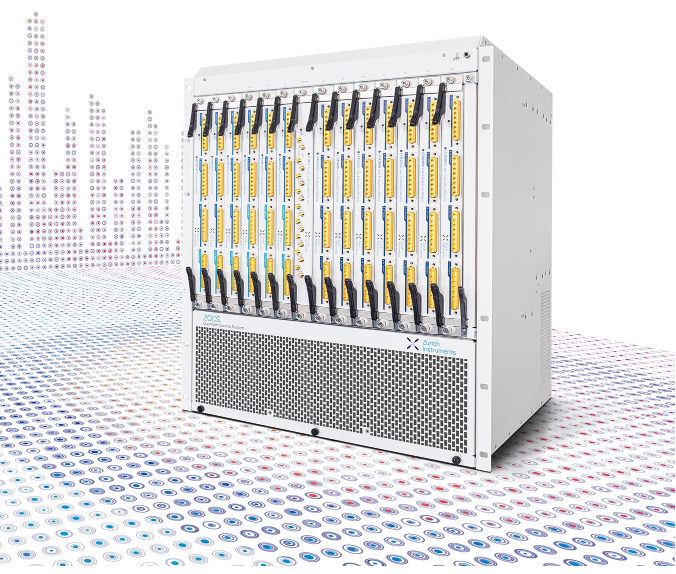
Image Credit: Zurich Instruments
Why has the quantum computing industry shifted its focus from NISQ devices towards fault-tolerant quantum computing?
Over the past several years, the industry has reached an important conclusion. While noisy intermediate-scale quantum (NISQ) devices have enabled tremendous scientific progress, there is currently no convincing evidence that they will deliver a meaningful quantum advantage for practical applications.
In fact, many arguments suggest the opposite. These systems remain fundamentally limited by noise, making it increasingly unlikely that they can solve commercially relevant problems more efficiently than classical computers.
As a result, virtually every major quantum computing company has shifted its roadmap towards quantum error correction and logical qubits. Logical qubits provide a way of encoding quantum information so errors can be detected and corrected continuously, allowing reliable computation over much longer timescales.
This represents the next major milestone for the industry. Rather than simply improving individual physical qubits, the objective is now to build logical qubits that can preserve quantum information long enough to execute useful algorithms reliably.
What role does the new ZQCS Quantum Control System play in achieving long-lived logical qubits?
Control electronics sit at the center of every quantum computer, stabilizing the entire quantum processor.
To build long-lived logical qubits, three capabilities must work together. First, systems must scale from tens to thousands of qubits. Second, they must maintain extremely high gate fidelities. Third, they must execute quantum error correction continuously and in real time.
The ZQCS was designed specifically around these three requirements. It is a scalable, high-fidelity control platform that is ready for real-time quantum error correction. Rather than focusing on today's laboratory-scale experiments alone, it provides an architecture capable of supporting the long-term roadmap towards practical fault-tolerant quantum computing.
Ultimately, our goal was to build a platform that grows alongside our customers as they move from physical qubits towards robust logical qubits.
From your discussions with researchers around the world, how have the priorities of the quantum computing community changed?
One of the biggest changes is that researchers are no longer asking, "How can we build a better qubit?" Instead, they are asking, "How do we operate logical qubits reliably at scale?"
This represents a fundamental shift from scientific discovery toward systems engineering.
As quantum processors become larger, success depends less on individual breakthrough components and much more on how well every part of the system works together. Reliability, serviceability, integration, and long-term operation have become just as important as raw technical specifications.
Researchers also want to move quickly. Reaching the next milestone requires minimizing integration risks, maintaining stable supply chains and working closely with technology partners that understand their long-term roadmaps.
Trust has therefore become an essential part of successful collaborations. Building a fault-tolerant quantum computer is simply too large a challenge for any organization to tackle alone.
Quantum error correction is central to the future of quantum computing. How was the ZQCS designed to support this challenge?
There are two important observations that influenced the architecture of the ZQCS.
The first is that quantum error correction requires extremely fast signal processing and real-time decision-making, regardless of the underlying qubit technology. Whether researchers work with superconducting qubits, trapped ions, neutral atoms, or spin qubits, they all need the ability to process measurement results immediately so errors can be corrected before they accumulate.
The second observation is that quantum error correction is still evolving. Researchers are actively exploring different decoder algorithms, hardware architectures, and implementation strategies as no one yet knows which approach will ultimately prove optimal. As a result, flexibility was one of our highest design priorities.
Within each ZQCS shelf, modules can exchange information directly with one another through a high-speed internal architecture. Every shelf also contains a dedicated timing and decoding module with powerful FPGA processing that aggregates and decodes syndrome data in real time.
Beyond this, the platform supports the ROCKY communication protocol, providing low-latency, high-bandwidth connections to external computing resources such as CPUs, GPUs, and HPC clusters. This allows researchers to investigate advanced decoding techniques, including machine-learning-based decoders and hierarchical error-correction strategies, while also supporting fast adaptive tune-up of quantum processors.
Rather than locking researchers into a single implementation, we wanted to provide a flexible foundation that allows the community to continue innovating as quantum error correction evolves.
ZQCS Launch Event: Mastering the Long-Lived Logical Qubit
Video Credit: Zurich Instruments
As quantum processors grow toward thousands of qubits, what are the biggest challenges for a quantum control system?
Scaling quantum computers is about much more than simply increasing the number of control channels. Once you move towards systems containing thousands of physical qubits, every aspect of the control infrastructure must scale reliably and predictably.
One of the most important requirements is deterministic pulse delivery. The system has to generate millions of precisely timed pulses across thousands of channels while guaranteeing that every signal arrives exactly when it should. Researchers need complete confidence that the control hardware is behaving correctly because any uncertainty immediately affects the performance of the quantum processor.
At the same time, the architecture must remain flexible enough to accommodate the rapid evolution of quantum error correction. While pulse execution must be deterministic, researchers are still exploring various decoder architectures and control strategies. We therefore designed the ZQCS with a modular accelerator architecture that combines guaranteed pulse execution with the flexibility needed to investigate new quantum error correction approaches.
The system also incorporates dedicated timing ASICs that distribute a global clock throughout the platform, allowing every module to operate from the same timing reference while continuously monitoring for errors. This creates a stable foundation that researchers can trust as they scale their experiments.
High gate fidelities remain essential for fault-tolerant quantum computing. How does the ZQCS help researchers achieve these performance levels?
The control electronics should never become the limiting factor in quantum processor performance.
We have already seen outstanding results from researchers using previous generations of Zurich Instruments technology. Groups including Professor Stefan Filipp's team at the Walther-Meissner-Institute and Professor Yasunobu Nakamura's team in Japan have demonstrated world-leading single- and two-qubit gate fidelities using our instrumentation.
With the ZQCS, our objective is to support even lower error rates by further reducing the contribution made by the control electronics. This required particular attention to phase noise, amplitude noise, and long-term signal stability.
Beyond fidelity itself, we also placed significant emphasis on signal-to-noise ratio. High signal-to-noise performance reduces unwanted excitation into leakage states, which are particularly damaging for quantum error correction because they introduce errors that are much harder to correct.
We achieved this by adopting a direct RF architecture that operates entirely within the first Nyquist zone, while carefully selecting components and materials to maximize long-term amplitude and phase stability. These characteristics become increasingly important in quantum memory experiments or in extended quantum error-correction demonstrations that may operate continuously for many hours.
Laboratory infrastructure becomes increasingly complex as systems scale. How was the ZQCS designed to integrate into large research facilities?
Scalability includes the practical realities of operating large experimental systems.
As quantum computers grow, researchers face challenges involving cable routing, grounding, thermal management, servicing, and long-term maintenance. These practical considerations become just as important as the electronic performance.
The ZQCS was therefore designed with laboratory integration in mind from the outset. The platform uses water-cooled racks to remove heat efficiently and maintain a stable thermal environment. We also introduced ganged cable connectors that simplify installation while reducing cable management complexity between the control system and the dilution refrigerator.
Another important design decision was adopting the advanced telecommunications computing architecture (ATCA), which is widely used in mission-critical scientific facilities such as CERN. This provides excellent serviceability, modularity, and long-term reliability while making maintenance significantly easier as systems continue to grow.
Ultimately, we wanted researchers to spend less time managing infrastructure and more time advancing their experiments.
Zurich Instruments places significant emphasis on collaboration. How do customer partnerships influence development of the ZQCS?
Collaboration has always been central to how we develop products.
Every customer has distinct scientific objectives, hardware platforms, and long-term roadmaps. Rather than delivering a standard instrument and leaving researchers to integrate it independently, we work closely with each customer to understand what they are trying to achieve and how the control system should evolve alongside their research.
This collaboration can range from delivering an off-the-shelf configuration through to highly customized long-term development projects. Because the ZQCS is modular, both at the shelf level and within individual modules, we can adapt specific analog front ends or introduce new capabilities without redesigning the entire platform.
Our customer project teams support laboratories throughout every stage of implementation, from defining the optimal architecture and managing deployment through to installation, validation, and early experimental operation.
This close collaboration also feeds directly into future product development. Requirements identified through customer projects help shape both the software roadmap and the hardware's evolution, ensuring the platform continues to address the needs of the quantum computing community.
Looking ahead, how do you see quantum control systems supporting the next generation of fault-tolerant quantum computers?
The launch of the ZQCS is an important milestone, but it is also the beginning of a much longer journey.
As the industry moves beyond logical qubits and toward systems containing tens of thousands and eventually millions of physical qubits, the challenges will continue to evolve. Future quantum control systems must support even greater levels of integration, lower cost per qubit, increasingly sophisticated software automation, and tighter interaction with classical computing resources.
The architectural principles behind the ZQCS were chosen with this future in mind. We see the platform as a long-term backbone that can accommodate future technologies while maintaining compatibility with evolving quantum processor architectures.
Being part of Rohde & Schwarz also provides access to expertise in areas such as ASIC development, photonics, large-scale manufacturing, and mission-critical system engineering. These capabilities strengthen our ability to support customers as quantum computing transitions from research laboratories towards industrial-scale systems.
Ultimately, our goal is to help researchers reach each successive milestone on the path to practical fault-tolerant quantum computing. That requires trusted partnerships, support for long-term research roadmaps, and delivery of quantum control systems that evolve alongside the technology itself.
About Dr. Sebastian Krinner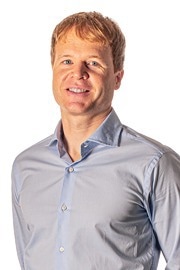
Dr. Sebastian Krinner is Product Manager for the ZQCS Quantum Control System at Zurich Instruments, where he leads the development of scalable quantum control technologies designed to enable fault-tolerant quantum computing. Before joining Zurich Instruments, he was a researcher at ETH Zurich, where he played a key role in one of the world's pioneering efforts to realize a logical qubit based on superconducting surface codes.

This information has been sourced, reviewed, and adapted from materials provided by Zurich Instruments AG.
For more information on this source, please visit Zurich Instruments AG.
Disclaimer: The views expressed here are those of the interviewee and do not necessarily represent the views of AZoM.com Limited (T/A) AZoNetwork, the owner and operator of this website. This disclaimer forms part of the Terms and Conditions of use of this website.