A novel computational method created at the University of Chicago aims to illuminate some of the most enigmatic materials globally, from high-temperature superconductors to solar cell semiconductors, by integrating two previously separated scientific viewpoints. The study was published in the journal Nature Communications.
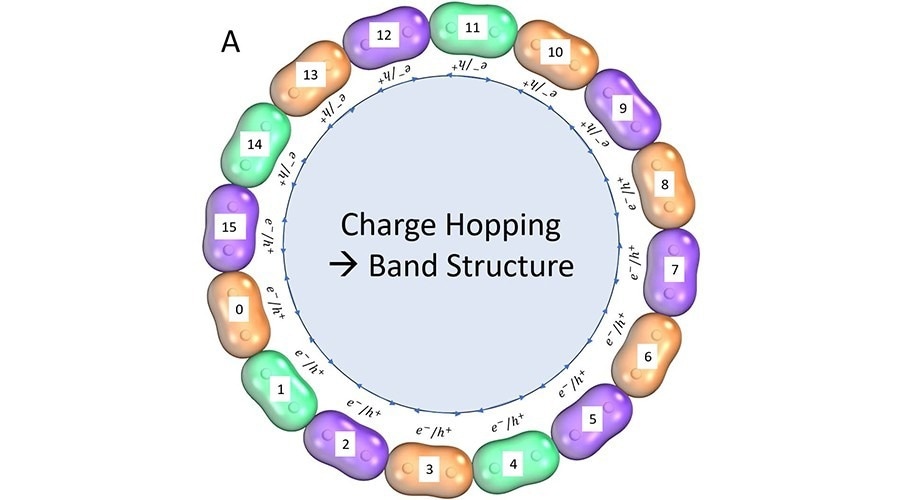 Research from Gagliardi Group offers a powerful new toolkit to understand and eventually design complex materials, including high-temperature superconductors and solar cell semiconductors. Image Credit: King et al
For decades, chemists and physicists have used very different lenses to look at materials. What we’ve done now is create a rigorous way to bring those perspectives together. This gives us a new toolkit to understand and eventually design materials with extraordinary properties.
Laura Gagliardi, Study Senior Author, Richard and Kathy Leventhal Professor, Department of Chemistry, The University of Chicago
Physicists often focus on broad, repeating band structures, while chemists tend to examine the localized behavior of electrons within individual molecules or fragments. Yet, many important materials, such as organic semiconductors, metal–organic frameworks, and strongly correlated oxides, don’t fit cleanly into either framework
In these materials, electrons are frequently perceived as hopping between repeating fragments instead of being uniformly distributed throughout the material.
Accurately describing electrons on individual fragments is possible, but then you lose the global picture of how charges move across a material. Our approach squares that circle: you model the local fragments, but also capture how electrons hop between them.
Daniel King, Study Co-First Author, The University of Chicago
The innovative technique is based on a framework known as the Localized Active Space (LAS) approach, which was initially developed by Research Assistant Professor Matthew Hermes. By adapting it for periodic solids, the team has devised a hybrid method that integrates local quantum chemistry with global band theory.
The researchers tested it on several complex cases. For example, hydrogen chains have historically posed significant modeling challenges: traditional density-function theory methods inaccurately classify these systems as metals, whereas more precise methods indicate that they should exhibit insulating behavior. The new LAS approach successfully illustrated how the electrons in hydrogen chains confer insulating properties.
The team employed LAS to model a p–n junction, which is a crucial element in solar cells and computer chips. The method unveiled how charges separate and migrate across the junction when exposed to light, a phenomenon that was previously difficult to capture.
As a proof of principle, this is step one. We showed that our method captures the right physics at high accuracy. There are now other advanced methods we’d like to integrate into the approach to keep improving it.
Bhavnesh Jangid, Study Co-First Author and Fourth-Year Graduate Student, University of Chicago
The researchers conceptualize their approach as a means to comprehend current materials and, ultimately, to create new ones.
“All materials are quantum mechanical at heart. This is an elegant step toward really seeing how quantum mechanics drives the properties we use in everyday life,” said King
The study received partial support from Q-NEXT, a National Quantum Information Science Research Center under the U.S. Department of Energy, which unites top researchers in the field of quantum information. The LAS method can be accessed as open-source through the Gagliardi Group, and the team has indicated that they are actively working on further improvements to enhance its accessibility and usability for fellow researchers exploring quantum transport properties.
The study received funding from the U.S. Department of Energy via the National Quantum Information Science Research Centers and as a component of the Computational Chemical Sciences Program.
Journal Reference:
King, S. D., et al. (2025) Bridging the gap between molecules and materials in quantum chemistry with localized active spaces. Nature Communications. DOI:10.1038/s41467-025-65846-1. https://www.nature.com/articles/s41467-025-65846-1