AZoQuantum speaks with Dr. Valtteri Lahtinen and Dr. Maciej Koch-Janusz about their collaboration on a new quantum computational fluid dynamics (CFD) algorithm. In this interview, they discuss how Quanscient’s One-Step Simplified Lattice Boltzmann Method (OSSLBM), combined with Haiqu’s quantum middleware optimizations, enabled a nonlinear fluid simulation to run on real IBM quantum hardware, marking an important step toward practical quantum-enhanced engineering simulation.
Could you introduce yourselves, and describe how you collaborated on your breakthrough algorithm?
Valtteri: I am Dr. Valtteri Lahtinen, the Chief Scientist and Co-Founder of Quanscient. I lead Quanscient Quantum Labs, our in-house research group focused on quantum algorithms for CFD and multiphysics. Additionally, I work as an Industry Professor of quantum computing at LUT University, here in Finland.
Quanscient is a multiphysics simulation company developing next-generation simulation software built on cloud computing, artificial intelligence, and quantum computing. Founded in 2021 in Tampere, Finland, the company focuses on enabling massive simulation throughput, supporting AI-scale training data generation, and unlocking simulation regimes that are classically infeasible.
In this collaboration, Quanscient developed the One-Step Simplfied Lattice Boltzman Method (OSSLBM) based quantum algorithm framework that enables these complex simulations to be represented as efficient quantum circuits.
Maciej: I am Dr. Maciej Koch-Janusz, the Principal Scientist of Haiqu. I am a theoretical condensed matter physicist by training, and I lead all of the research teams at Haiqu.
Haiqu is a quantum software company focusing on development quantum middleware: software enabling quantum applications developers, like Quanscient, to execute their quantum algorithms on the actual QPUs in the most accurate, performant and cost efficient way. We build state-of-art quantum compilation, error mitigation, application subroutines (e.g. utility-scale data loading), as well as AI frameworks to automate the use of these tools.
In this project Haiqu applied our compression, state readout and preparation, and error mitigation methods to Quanscient’s OSSLBM algorithm, which produced 3x shallower circuits and allowed their accurate execution on the IBM quantum processors.
Image Credit: jullasart somdok/Shutterstock.com
What specifically distinguishes this result from earlier Quantum Lattice Boltzmann Method demonstrations in quantum CFD?
Valtteri: Earlier quantum algorithms for CFD heavily relied on linear system solvers (which suffer, for example, from condition number scaling issues) or standard LBM formulations applied strictly to idealized linear cases. What sets our work apart is the successful implementation of a nonlinear Navier-Stokes problem on a real IBM QPU within a hybrid simulation loop. We moved past isolated theoretical constructs to execute a practical 2D nonlinear flow problem with an immersed object on actual hardware.
Why is running a 15-step nonlinear fluid simulation with an obstacle on quantum hardware such a meaningful milestone?
Valtteri: By successfully executing 15 iterative time-steps, we proved that our hybrid loop can carry dynamical flow information forward in time despite hardware noise. Furthermore, implementing a masking method to enforce zero-fluctuation conditions inside a solid immersed object demonstrates our ability to handle the complex geometries essential for real-world engineering, such as airfoils.
Maciej: Indeed, the significance is not so much in the scale of the problem being solved, but in combining all the elements of a full-fledged CFD application in an actual simulation executed on a noisy QPU: nonlinearity, non-trivial boundary conditions, multiple time-steps, state preparation and readout.
What key technical barriers did you overcome to move beyond highly idealized quantum CFD cases toward more realistic simulations?
Valtteri: From our perspective, we had to rethink the entire LBM workflow to be more compatible with quantum computing and reduce the qubit and gate requirements. However, an efficient algorithm is only half the battle, and that’s where Maciej and his team came in to actually run it on today’s hardware.
Maciej: Even with smartly designed algorithm structure, like in OSSLBM, the final step of translating to a hardware-executable quantum circuit can make-or-break the final performance. Using our circuit analysis and compression tools we were able to reduce the OSSLBMs depth threefold compared to standard compilation. Additionally, OSSLBM is an iterative algorithm, hence state preparation and readout are of key importance. Here we were able to employ state-of-art tensor-network based methods to both prepare the inputs using shallow circuits, and to read them out efficiently. Together with error mitigation this drastically reduced the effect of hardware noise and allowed obtaining results taking a realistic number of measurements.
How does the OSSLBM-based approach change the way CFD problems are mapped onto quantum hardware compared with previous methods?
Valtteri: The traditional LBM uses a two-step "collide-and-stream" approach. Our OSSLBM framework simplifies this into a streamlined single step. More importantly, the core parts of our algorithm work directly with macroscopic variables, like density and momentum, rather than dealing purely with distribution functions. This makes applying physical boundary conditions much simpler and highly compatible with quantum circuits. Additionally, the OSSLBM framework is compatible with a multitude of physics models and can be relatively easily extended beyond pure CFD.
How did your collaboration work in practice, and which optimizations were most critical to running the benchmark on IBM Heron R3?
Valtteri: We have already been collaborating for a couple of years, and the practices are quite refined and natural. I remember meeting the Haiqu team at several quantum events over the years. We connected quite naturally on a personal level, which helped build trust early on. From there, we began meeting more regularly, leading to our first official collaboration on the BMW-Airbus challenge. We became finalists in that challenge, and it set the template for our working relationship: we provided the lattice Boltzmann algorithms, and they compressed and ran the circuits using their middleware tools.
From our perspective, reaching this current milestone has been a long development process. It has taken several years of persistence to design a flexible algorithm like the one-step simplified quantum lattice Boltzmann method, refine the details, and rigorously validate it step by step on emulators before ever touching a real QPU. But an elegant algorithm only gets you so far if it cannot survive the noise of current quantum hardware. For that, I’ll hand it over to Maciej to explain how we actually made this run on the IBM Heron R3.
Maciej: We develop tools for a broad spectrum of quantum applications, but it helps to integrate specific domain knowledge for maximum performance. Our collaboration with Quanscient started a few years back, and we already had experience working with Quantum Lattice Boltzmann algorithms. A good understanding of the theoretical OSSLBM circuit structure, and frequent discussions with the Quanscient team, allowed us to e.g. identify logical circuit fragments most amenable to different methods of compression. For instance, we combined the QLBM ‘collision’ term with tensor-network state-preparation, and managed to offload the obstacle computation to classical postprocessing. CFD algorithms often employ multi-qubit gates, and so their efficient synthesis can make a large impact as well. Another key practical consideration is state reconstruction. General state tomography can be exponentially expensive in the number of shots, so understanding the mathematical nature of the algorithm solution being read out and designing a targeted readout method is vital. We have designed a new function tomography method to reconstruct the CFD flow fields in our experiments.
Download the PDF of this interview
What aspects of these results suggest quantum CFD could eventually become relevant for real-world engineering applications?
Valtteri: The core promise lies in how the algorithm scales. Traditional CFD is severely bottlenecked by memory and compute power when dealing with real-world complexities. For instance, a direct numerical simulation of a full aircraft involves Reynolds numbers on the scale of 10^8, requiring roughly 10^{24} floating-point operations; far beyond classical limits. Quantum computing offers an exponential number of degrees of freedom with respect to a linear increase in qubits.
What makes our recent result so promising is that we proved this scaling potential is not just theoretical. By executing the One-Step Simplified LBM (OSSLBM) over 15 time steps, we showed that the algorithm continues to converge and retains meaningful dynamical information about the flow, effectively converging towards the steady state with subsequent steps, even in the presence of hardware noise. Because our framework is highly flexible, as we scale up logical qubits, this approach has great potential to extend to the massive multiphysics tasks that classical computers struggle to finish in a reasonable timeframe.
Maciej: What is exciting is that QLBM is a framework which offers a scaling advantage, is able to encompass complex CFD problems, and simultaneously is possible to execute in such highly non-trivial proof-of-principle experiments already on the near-term quantum devices. Our work shows that a tight collaboration between algorithm designers and middleware developers building hardware and algorithm-aware tools is extremely fruitful and that, in particular, quantum CFD applications are very amenable to such optimizations.
For those less familiar with CFD, where does this result move the field forward most: algorithms, hardware, error mitigation, or practical use cases?
Valtteri: It moves the field forward by demonstrating the successful integration of all these elements into a single, functional end-to-end workflow. Historically, quantum CFD demonstrations have either been isolated theoretical exercises or highly idealized linear cases run on perfect emulators. This work demonstrates that when you combine a highly streamlined algorithm with hardware-aware middleware, you can already today solve a realistic nonlinear fluid flow problem with an embedded obstacle on noisy quantum hardware. We have transitioned the field's conversation from "Can we represent fluid dynamics on a quantum computer?" to "Here is the operational pipeline, now how do we scale it?"
Maciej: Indeed. We now have all the functional and qualitative elements of a CFD workflow. The strength of the results is in the combination of methods, and in demonstrating that CFD algorithms are indeed amenable to such strong optimizations. I think this is extremely important. Oftentimes people focus on the future large-scale fully fault-tolerant quantum computers and generic purpose solvers, while in fact for a long while we will be in the Early Fault Tolerant Quantum Computing (EFTQC) era, with machines still limited by scale and residual noise. The sort of algorithm/middleware co-design we demonstrate will be key to pushing quantum CFD past the threshold and achieving commercial utility.
What upcoming milestone would signal to engineers that quantum CFD is becoming a viable simulation tool rather than just an experiment?
Valtteri: We have now demonstrated that a small-scale 2D problem can run on a real quantum device. The immediate next milestones are scaling this approach to larger 2D domains and eventually tackling 3D simulations.
However, the ultimate signal for the engineering industry will be achieving "quantum utility" for a pinpointed industrial use case. This means reaching a point where our quantum pipeline, perhaps initially for linear acoustics or specific aerodynamic modeling, can deliver insights or performance that a classical high-performance computing cluster cannot easily match.
Another massive milestone will be the convergence of quantum simulation and AI. We anticipate using quantum computers to generate highly complex simulation data (like small-scale turbulence) that is impossible to produce classically. That data can then be used to train Multiphysics AI models. Once we demonstrate that a quantum workflow provides a clear resource or fidelity advantage for generating this kind of R&D data, it will officially mark the shift from a fascinating experiment to a viable commercial tool.
Want more on Quantum Computing? Check out our latest eBook here
About the Speakers
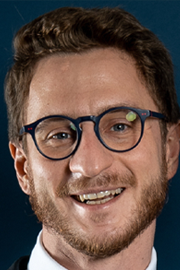
Maciej Koch-Janusz is the Principal Scientist at Haiqu. A theoretical condensed matter physicist with a PhD from the Weizmann Institute of Science, his research combines physics, information theory, and machine learning. Maciej held postdoctoral appointments at ETH Zurich, and as a Marie Curie Fellow at the University of Chicago and University of Zurich. In his free time, he enjoys mountaineering and studying Japanese.
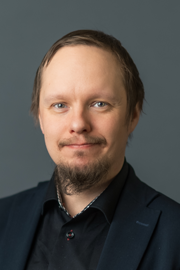
Dr. Valtteri Lahtinen is the head of Quanscient Quantum Labs. He is an experienced, internationally recognized research leader with more than 15 years of research experience at the intersection of computational physics, mathematics, and quantum technologies. In academia, he has worked at institutions such as Aalto University, Boston University, Tampere University, and the University of Montreal. Currently, in addition to being the Chief Scientist and Co-Founder of Quanscient, he holds the position of Industry Professor of Quantum Computing at LUT University.
Disclaimer: The views expressed here are those of the interviewee and do not necessarily represent the views of AZoM.com Limited (T/A) AZoNetwork, the owner and operator of this website. This disclaimer forms part of the Terms and Conditions of use of this website.