In this interview, AZoQuantum speaks with Yonatan Cohen, CTO and Co-founder of Quantum Machines, about the growing importance of latency in scalable quantum computing. He discusses Quantum Machines’ role in the quantum ecosystem, explores open architectures, full-stack integration, and the challenges facing different qubit modalities as the industry moves beyond simple qubit-count milestones.
Could you please introduce yourself and your role at Quantum Machines?
I'm Yonatan Cohen, CTO and one of the founders of Quantum Machines. My background is in physics, and I completed my PhD at the Weizmann Institute in Israel, where I worked on quantum electronic devices and the search for topological quantum states of matter.
Together with my co-founders, who were also pursuing their PhDs at the time, we founded Quantum Machines in 2018. Today, we develop control and orchestration systems for quantum computers. Every quantum processor requires a classical system to drive, coordinate, and execute quantum operations while connecting the processor to the broader computing infrastructure.
Our role is to provide that control layer. We work across all major qubit modalities, enabling customers throughout the industry to build and scale their quantum computers while accelerating progress toward increasingly ambitious roadmaps.
How would you describe Quantum Machines’ role in the quantum ecosystem today, and how has your view of what really needs to scale evolved as the industry moves beyond qubit counts?
Our role is fundamentally about enablement. We are not building a single quantum computer ourselves. Instead, we work horizontally across the ecosystem, providing the technology that enables many different companies and research groups to build quantum computers.
One important aspect is scalability. Control systems themselves must scale from hundreds of qubits to thousands, tens of thousands, and eventually far beyond that. In many architectures, scaling the control infrastructure is just as important as scaling the quantum processor.
We also place a strong emphasis on flexibility and user experience. Much of our customer base consists of R&D teams building next-generation quantum systems, and our goal is to help them iterate faster and accelerate development cycles.
The third area, which has become increasingly important, is connecting quantum systems to HPC and data-center infrastructure. As quantum computing matures, it becomes clear that quantum processors will not operate in isolation. They must communicate seamlessly with classical accelerators and larger computing environments through low-latency links and appropriate software tools. That integration is becoming a critical part of what needs to scale.
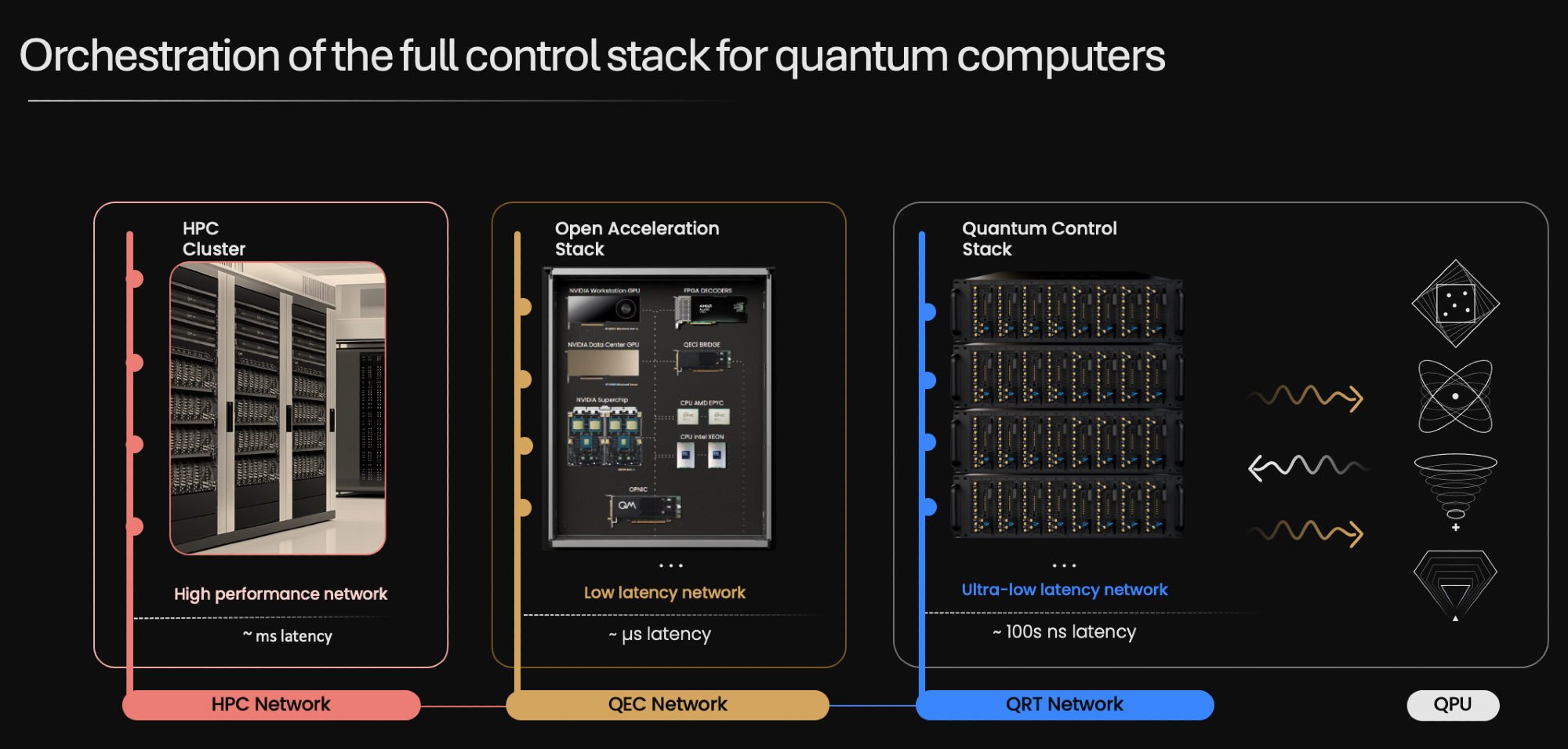
Image Credit: Quantum Machines
What does the 3.3 µs latency benchmark represent in practice, and why is it so important for scalable quantum error correction?
The 3.3 microsecond benchmark measures the time required to complete an entire quantum-classical feedback loop.
It starts when the control system measures the state of a qubit. That information is then sent to a classical compute accelerator such as a GPU, which performs the necessary processing and returns a result. The control system then uses that result to determine which quantum operation should be performed next.
In practice, this benchmark represents the speed of the interaction between the quantum processor and the classical computing resources supporting it.
That becomes extremely important when discussing quantum error correction, large-scale calibrations, and eventually real-world applications. As systems scale, the ability to process information and respond rapidly becomes a fundamental requirement rather than simply a performance optimization.
How does microsecond-scale latency change what is possible for error-correction codes, feedback schemes, and control strategies?
When implementing quantum error correction at scale, enormous amounts of measurement data must be continuously transferred from the quantum processor to classical compute resources. Those resources perform error decoding, determine what errors occurred, and send instructions back to the controller so corrective actions can be applied.
To make this practical, you need both high bandwidth and extremely low latency.
The exact requirements vary depending on the qubit modality. Faster qubits generally require faster feedback. For some modalities, particularly superconducting qubits, achieving sufficiently low latency is essential. Without it, large-scale quantum error correction simply does not become feasible because the amount of classical data and processing accumulates too quickly.
Reducing both latency and communication bottlenecks enables error correction to scale.
The same principle applies to calibration workflows. Before running useful applications, quantum computers execute extensive calibration procedures to determine the optimal operating parameters needed to achieve high-fidelity quantum operations. Those parameters drift over time, requiring continuous monitoring and adjustment.
In many ways, calibration is another form of error correction. Performing it efficiently at scale depends on maintaining fast communication between the quantum controller and classical accelerators.
What does the future division of labor look like in a mature hybrid quantum-HPC system between the quantum accelerator, classical accelerator, and the control stack coordinating them?
I think the future will consist of a highly heterogeneous workflow involving several specialized components working together.
The quantum controller will orchestrate operations on the quantum processor while continuously streaming information to HPC resources. Within that classical environment, different agents will perform different tasks. Some will handle error decoding, others will manage system stabilization, and others will orchestrate logical quantum operations.
Those components will then communicate instructions back to the controller, which ultimately executes the required operations on the qubits.
The controller, decoders, stabilizers, logical-circuit orchestrators, and eventually application-level software all become part of a tightly integrated workflow. The challenge is not simply having these components exist independently but ensuring they operate together as a coordinated system with minimal latency and overhead.
What design principles or interface standards are most important to making open, qubit modality-agnostic architectures possible without sacrificing performance?
One of the key principles is abstraction without compromise.
Quantum computing will likely remain a multi-modality industry for quite some time. Different qubit technologies have different strengths and face different engineering challenges. Because of that, it is important to build control systems and interfaces that can support a broad range of hardware approaches.
At the same time, openness cannot come at the expense of performance. The interfaces connecting quantum processors, control systems, and classical computing infrastructure must remain efficient enough to support demanding workloads such as quantum error correction and real-time feedback.
The most successful architectures will be those that provide flexibility and interoperability while still enabling the extremely low-latency operation required by large-scale quantum systems.
Across the qubit modalities you have worked with, where do you see the biggest bottlenecks today, and which are most likely to be solved through better full-stack integration?
The challenges vary depending on the modality, but increasingly many of the bottlenecks are no longer isolated to the quantum processor itself.
As systems scale, the interaction between hardware, control electronics, software, and classical compute infrastructure becomes increasingly important. Error correction, calibration, orchestration, and data movement all require tight coordination across the entire stack.
Many of the performance limitations people encounter today stem from those interfaces rather than from the qubits alone. Better full-stack integration can remove significant inefficiencies by ensuring that every layer of the system works together rather than operating as independent components.
This is why we place so much emphasis on orchestration and low-latency connectivity. Solving those system-level bottlenecks can unlock meaningful improvements across multiple qubit modalities simultaneously.

Image Credit: atdigit/Shutterstock.com
How have conversations with major quantum computing companies changed as they move from proof-of-concept devices toward commercially meaningful, error-corrected systems?
The discussion has shifted significantly.
In earlier stages, conversations were often dominated by questions around demonstrating qubits, achieving initial control, and proving that a particular architecture could function. Today, many companies are focused on the realities of scaling.
That means discussions increasingly center on quantum error correction, system orchestration, calibration at scale, integration with HPC infrastructure, and how quantum processors will ultimately fit into broader computing environments.
The industry is moving from proving that quantum computers can work to determining how they can become practical, reliable, and commercially meaningful systems. As a result, topics such as latency, control architecture, and quantum-classical integration have become far more central to those conversations than they were just a few years ago.
What is your perspective on the potential of Majorana-based quantum computing?
I find it incredibly exciting. I worked on this area during my PhD, so it is a topic that has always been close to my heart. The recent progress is genuinely impressive, and it is encouraging to see how far the field has come.
What makes Majorana-based qubits so compelling is the underlying concept. The idea is that some aspects of error correction can effectively happen in the hardware itself. Rather than continuously measuring qubits, decoding errors, and applying corrections through complex control systems, part of that protection is built directly into the physics of the system.
From a scientific perspective, it is a beautiful idea. The mathematics and physics behind these systems are fascinating because they offer a pathway to intrinsically more robust qubits. In principle, that could significantly reduce the overhead associated with quantum error correction.
That said, there is still considerable work to be done before this becomes a scalable quantum computing platform. Building individual components and demonstrating key capabilities is one thing; integrating everything into a large-scale, fault-tolerant system is another challenge entirely.
What is encouraging is that we are continuing to see meaningful progress. Companies like Microsoft are doing important work in developing and validating the individual building blocks needed for this approach. If those pieces can ultimately be brought together into a fully functioning system, the scalability potential could be tremendous.
So I am very optimistic about the long-term possibilities. It is an exciting direction for the field, but there is still a significant journey ahead before we know exactly how far it can scale.
Download the PDF of this interview here
About the Speaker
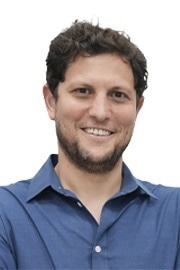
Yonatan Cohen is the Co-Founder and CTO of Quantum Machines. An acclaimed entrepreneur and physicist, specializing in quantum electronics and advanced microfabrication. He previously co-founded and served as Managing Director of the Weizmann Institute of Science’s flagship entrepreneurship program, where he facilitated the translation of deep-tech breakthroughs into commercial ventures. Yonatan completed his MSc and PhD in Prof. Moty Heiblum’s laboratory at the Weizmann Institute, focusing on quantum electronics, superconducting-semiconducting devices, and microfabrication. His research has been featured in leading peer-reviewed journals. Yonatan holds a BSc in Physics and Mathematics from the University of Washington and received the Ruth and Prof. Abraham (Edek) Blaugrund Prize for Academic Excellence in 2018.
Disclaimer: The views expressed here are those of the interviewee and do not necessarily represent the views of AZoM.com Limited (T/A) AZoNetwork, the owner and operator of this website. This disclaimer forms part of the Terms and Conditions of use of this website.