In this interview, AZoQuantum speaks with Dalius Petrulionis, Co-Founder and Chief Technology Officer at Astrolight, about how laser communications could support lunar exploration, permanent infrastructure on the Moon, and future interplanetary networks.
Could you introduce yourself and your role at Astrolight?
I am the Co-Founder and Chief Technology Officer at Astrolight. My background is primarily in lasers, although I have also worked with materials science and radio-frequency technologies. I have now spent more than 13 years working with lasers.
My earlier work focused on femtosecond lasers, which are used for precision manufacturing processes such as machining phone screens and microchips. Lithuania has a particularly strong laser industry, with systems manufactured there in significant numbers.
At Astrolight, my role has been to take advantage of that laser knowledge and infrastructure and apply it to space. Our team combines Lithuania’s expertise in lasers with experience from its growing space sector to develop optical communication technologies capable of operating beyond terrestrial applications.
Download the PDF of this interview here
As lunar missions evolve toward regular landings and long-term habitation, where will communications become the biggest bottleneck?
The deeper into space you go, the greater the limitations of radio-frequency communication become. This is fundamentally related to wavelength. Radio has a relatively long wavelength, which means that it cannot be focused as tightly and the signal spreads considerably over distance.
Shorter optical wavelengths spread much less, allowing a greater proportion of the transmitted power to reach the receiver. Deep-space probes illustrate the communications problem particularly clearly. A spacecraft operating at extreme distances may only be able to send very small amounts of data using conventional systems. That may be sufficient for a basic scientific probe, but it will not support increasingly sophisticated instruments or sustained human activity.
As our ability to generate data in space grows, we need a channel capable of carrying it. On Earth, data centers are interconnected via optical fibers rather than copper because fiber offers much higher bandwidth and better energy efficiency. Space has no atmosphere or material to distort the beam between two spacecraft, so the natural equivalent is a point-to-point laser link.
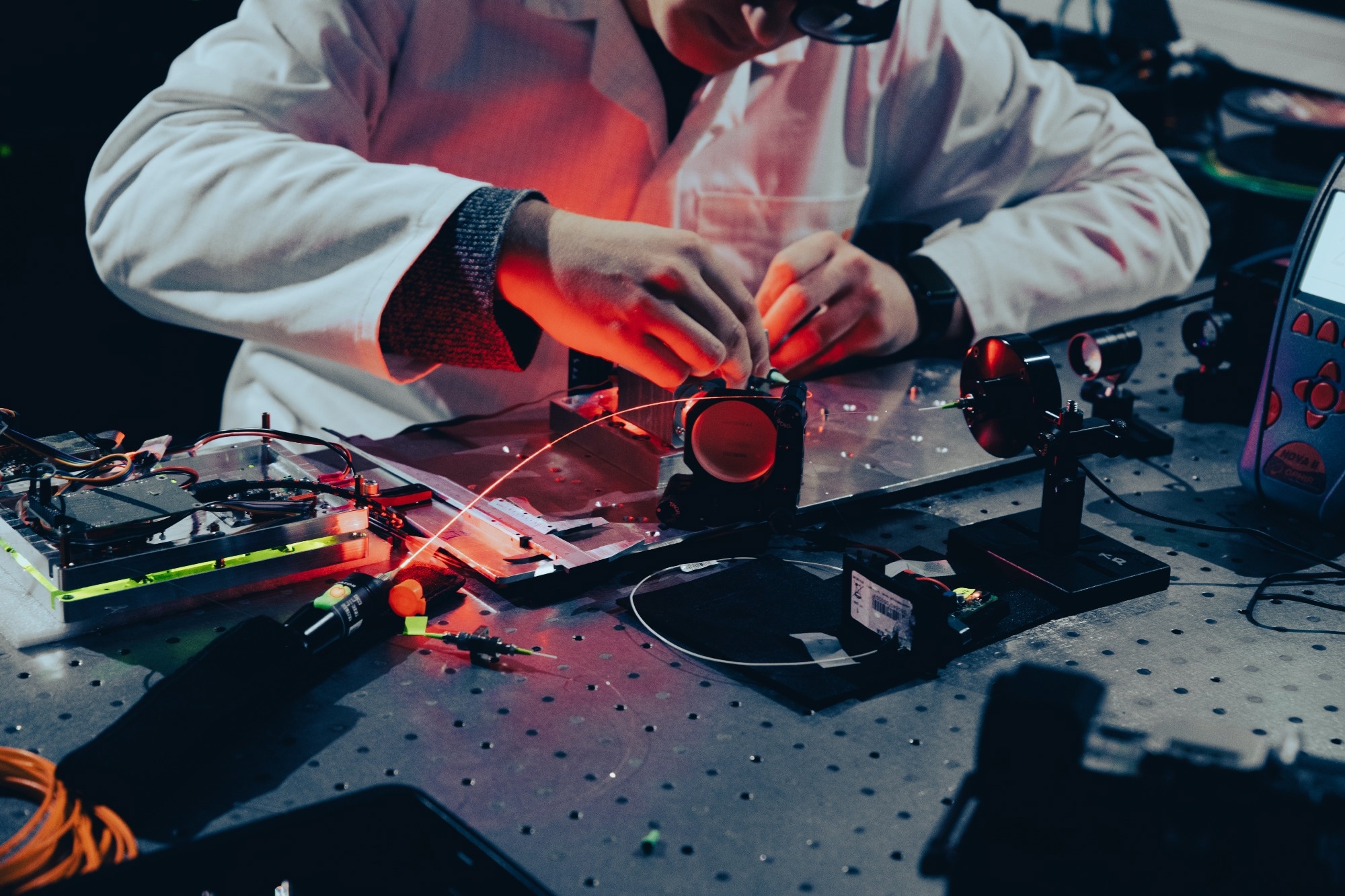
Image Credit: Astrolight
Why are laser communications better suited than radio for the growing data demands of lunar infrastructure?
There are two important limitations in lunar communication: latency and bandwidth. Latency is determined by the distance between the Earth and the Moon. Whether you use radio or laser communication, the signal still takes time to travel, so that delay cannot be removed.
Bandwidth is different because it depends on how much transmitted power reaches the receiver. A laser beam can be focused much more tightly than a radio signal, giving you a higher power density at the receiving terminal. That means you can transmit more data while consuming less power.
This also allows spacecraft, instruments and communication terminals to be smaller. We are no longer talking only about individual probes. If people are conducting complex activities on the Moon, the amount of data generated will increase dramatically.
Power generation and heat dissipation will be major constraints for lunar infrastructure. Laser communications reduce the energy required for each transmitted bit, easing both power demand and cooling requirements. They can also simplify the equipment that must be launched. Launching hardware into low Earth orbit is becoming relatively affordable, but sending it to the Moon remains extremely expensive, so reducing mass and complexity is critical.
Which lunar applications will benefit most from optical links?
I do not think laser communication is specific to one lunar application. It is more like a mobile phone or an internet connection. Once the communications capability is available, it supports almost everything.
Scientific instruments will need to return high-resolution measurements. Rovers and autonomous systems will generate imaging, navigation and operational data. Habitats will require continuous monitoring, while crews will need reliable connections with teams and families on Earth.
People are accustomed to instant video connectivity. Communication with the Moon cannot be completely instantaneous because of the unavoidable delay, but optical links could still carry high-quality video and large scientific datasets. Conventional radio links will struggle to provide the bandwidth required as lunar activity scales, making optical communication a necessary part of the infrastructure.
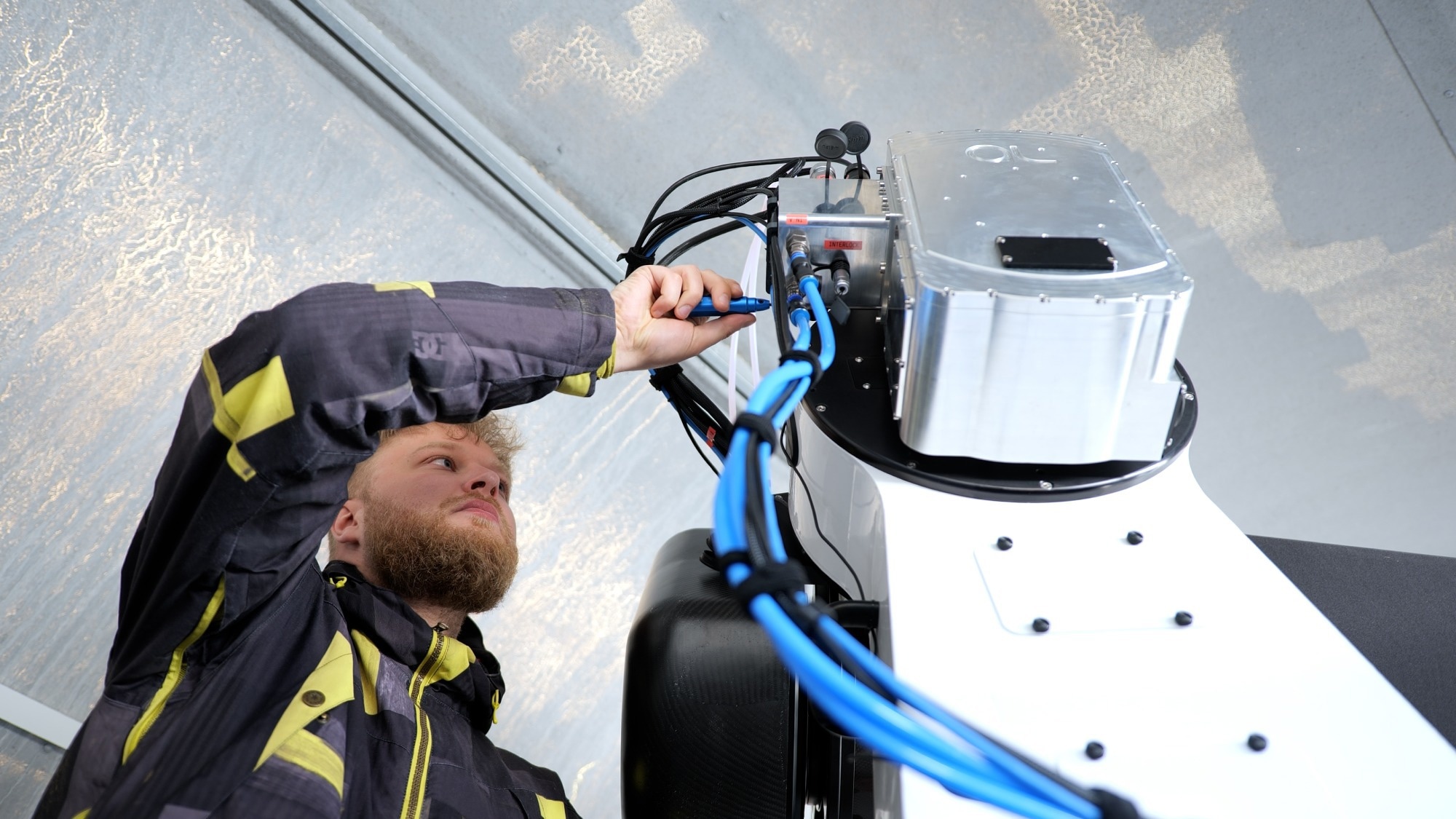
Image Credit: Astrolight
What are the biggest challenges in making laser communications reliable over the Earth-Moon distance?
The principal challenge is environmental resilience. While vacuum conditions are familiar from Low Earth Orbit, the lunar environment presents additional considerations and is not identical. The greater concern is radiation exposure and the level of reliability required for equipment operating beyond Earth orbit.
Lunar hardware is expensive to launch and difficult or impossible to repair. If it supports a human mission, failure could also affect the crew’s ability to return safely. Optical terminals therefore need fault tolerance, redundancy and components that can survive long periods of radiation exposure.
Radiation can damage optical amplifiers and electronics, both of which are essential parts of an optical terminal. We already understand how to manufacture laser communication systems economically for low Earth orbit, as demonstrated by emerging commercial and governmental constellations. The next challenge is adapting that more scalable approach so the technology can survive the much harsher demands of deeper-space missions.
How do Astrolight’s optical terminals maintain precise pointing while operating on fast-moving spacecraft in harsh environments?
Movement in space is generally more predictable than people imagine. Astrolight also operates in the naval domain, where a ship’s movement can be much harsher and less predictable because of waves and changing weather.
In orbit, the movement of a spacecraft is largely governed by orbital mechanics. These trajectories are deterministic, so pointing can be calculated and controlled precisely. The engineering challenge is then to build the terminal so that it can execute those movements reliably and maintain the optical link.
Astrolight follows a new-space approach by using commercially available components wherever practical. We use technologies related to those found in terrestrial lidar systems and other established applications. This reduces component costs and makes the terminals easier to manufacture at scale.
There is still a considerable amount of design and integration work required to make those components suitable for space, particularly when accounting for vibration, radiation and temperature changes. However, relying on commercially mature technologies creates a path toward terminals that are both resilient and economically viable. As lunar activity increases, that commercial scalability will become increasingly important.
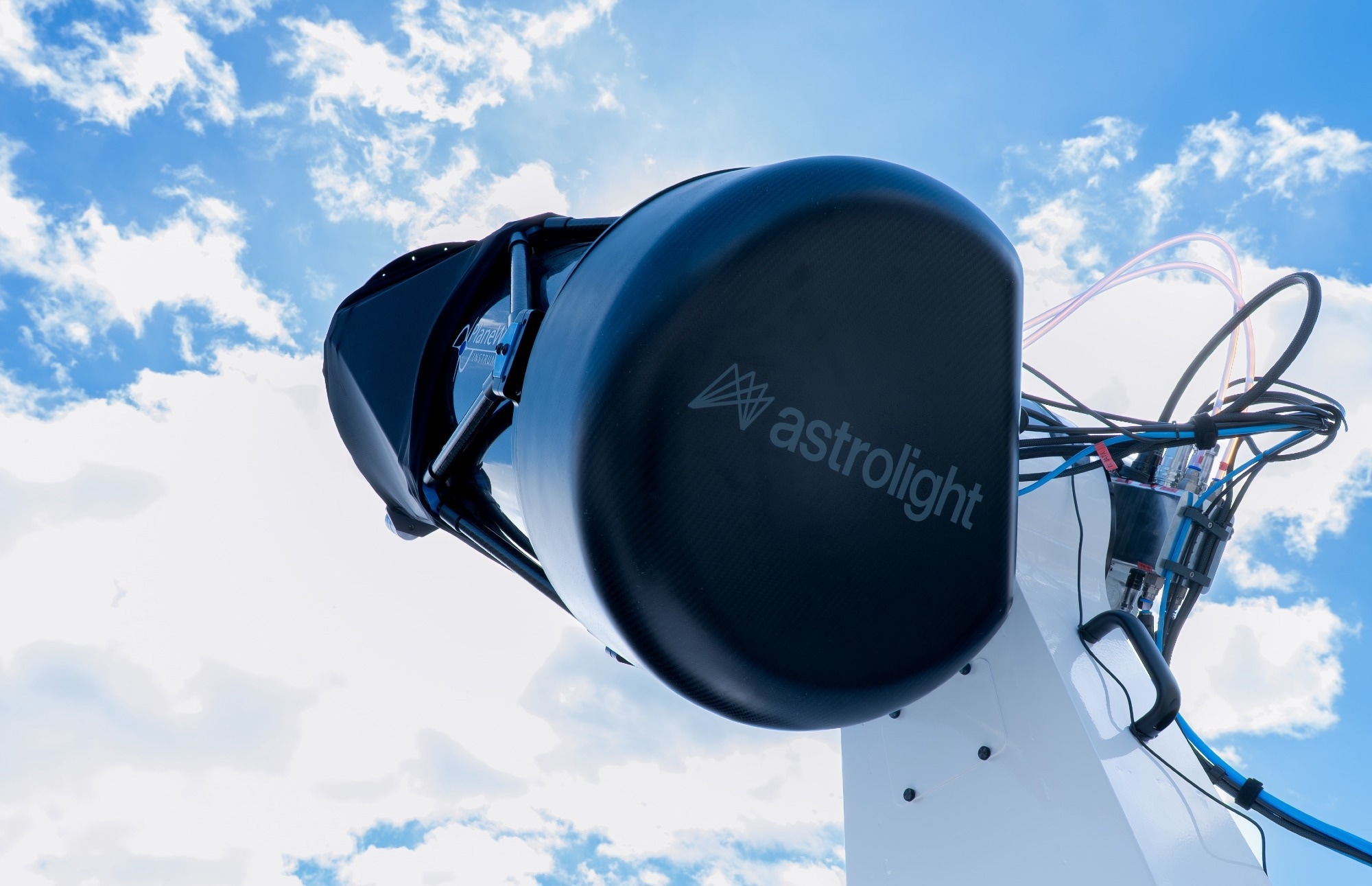
Image Credit: Astrolight
What lessons from Astrolight’s in-orbit operations and participation in the ESA HydRON program could help shape future lunar networks?
Our in-orbit launches are still relatively recent, so I would be cautious about drawing final conclusions. However, the fact that the systems are working already provides encouraging evidence for our technical and manufacturing approach.
Astrolight differs from some traditional space hardware manufacturers because we focus on assembly and integration rather than producing every component ourselves. It is similar to how a laptop manufacturer sources parts from specialist suppliers and then integrates them into a complete product. We use technologies that are not exclusive to the space sector, which means production is less dependent on extremely expensive, mission-specific components.
That model could be relevant to future lunar networks as access to space becomes less expensive. For missions that do not carry people, it may be more effective to deploy a larger number of lower-cost platforms and accept that some could fail, rather than designing one exceptionally expensive spacecraft around zero tolerance for failure.
Our terminals are flying on platforms ranging from student-built satellites to spacecraft weighing around 150 kilograms. The smallest host is a 3U satellite, yet it can still support connectivity in the hundreds of megabits or potentially gigabits per second. This demonstrates how optical links can provide high-rate access to data even from very small platforms. A distributed swarm of affordable terminals could therefore become an important architectural option for lunar networks.
How critical is ground infrastructure to lunar laser communications, and what role could Astrolight’s planned Greenland optical ground station play?
Ground infrastructure is extremely important. As the distance increases, you either need greater transmission power in space or a larger and more sophisticated receiver on Earth.
One advantage of this arrangement is that the equipment sent to the Moon can remain relatively small and simple, while the larger and more complex systems stay on the ground, where they are accessible. Deep-space optical systems can require meter-scale telescopes and highly sensitive detectors operating at cryogenic temperatures. It is much easier to support that complexity on Earth than on a lunar spacecraft.
Astrolight has already implemented a ground station in Greece and supplied components for other stations. The Greenland optical ground station is intended initially as a pilot facility for low Earth orbit links. An important part of the project is that it uses manufacturing technologies related to those used in our space terminals. They are affordable enough for terrestrial deployment while retaining the resilience required to cope with large temperature swings, vibration and demanding environmental conditions.
As optical ground infrastructure expands, stations will need to operate with very limited human supervision. A network cannot depend on people manually overseeing every connection because that would be too expensive and difficult to scale. The Greenland station can help demonstrate the unattended, resilient infrastructure needed for both near-space and future deep-space communication networks.
Looking beyond the Moon, could laser communications become as fundamental to space connectivity as fiber-optic networks are on Earth?
Definitely. The deeper into space we travel, the more essential lasers become.
If humanity eventually becomes an interplanetary civilization, we will need to reconsider what we mean by connectivity. We are used to communicating almost instantly across the Earth, but the speed-of-light delay between planets cannot be avoided. The solution will be to create a highly distributed data infrastructure.
It could operate in a similar way to the content-delivery networks used on Earth. These systems store copies of data on local servers so that websites and other services can respond quickly without retrieving every piece of information from a distant location. An interplanetary network would also need local servers, replicated information and extensive caching.
Consider people living on Mars. They would probably want resources such as Wikipedia, news archives and scientific databases to remain synchronized between Earth and Mars. That would require enormous bandwidth between planetary data systems. Radio communication will not be sufficient for that scale of data transfer, so optical links are likely to be the only realistic option.
Those links will need to be high-capacity, affordable and widely deployed. They will also require sophisticated installations, relays and retransmission systems to account for extreme distances and periods when planets are not favorably aligned. In that sense, laser communications could become the optical backbone of an interplanetary internet, just as fiber forms the backbone of terrestrial connectivity today.
Astrolight also featured on AZoOptics - check out their interview
About Dalius Petrulionis

Dalius Petrulionis is the Co-Founder and Chief Technology Officer of Astrolight, a Lithuanian company developing high-speed laser communication links between Earth, spacecraft and other operational platforms. As CTO, he helps lead the development and integration of the company’s optical communication terminals and associated technologies. Astrolight describes its mission as connecting Earth and space through high-speed laser links to support satellite connectivity and deep-space exploration.
Disclaimer: The views expressed here are those of the interviewee and do not necessarily represent the views of AZoM.com Limited (T/A) AZoNetwork, the owner and operator of this website. This disclaimer forms part of the Terms and Conditions of use of this website.