More than fifty years after the Apollo missions, the Moon has once again taken center stage in global space exploration. But unlike the previous race for symbolic milestones, today’s lunar efforts are driven by a blend of scientific inquiry, technological progress, and strategic interests. With modern advances in instrumentation, robotics, and data analysis, researchers can now tackle questions that were beyond reach during the early days of lunar exploration. This article explores the scientific goals, technological advancements, and the commercial and geopolitical dynamics fueling the renewed push to return to the Moon.
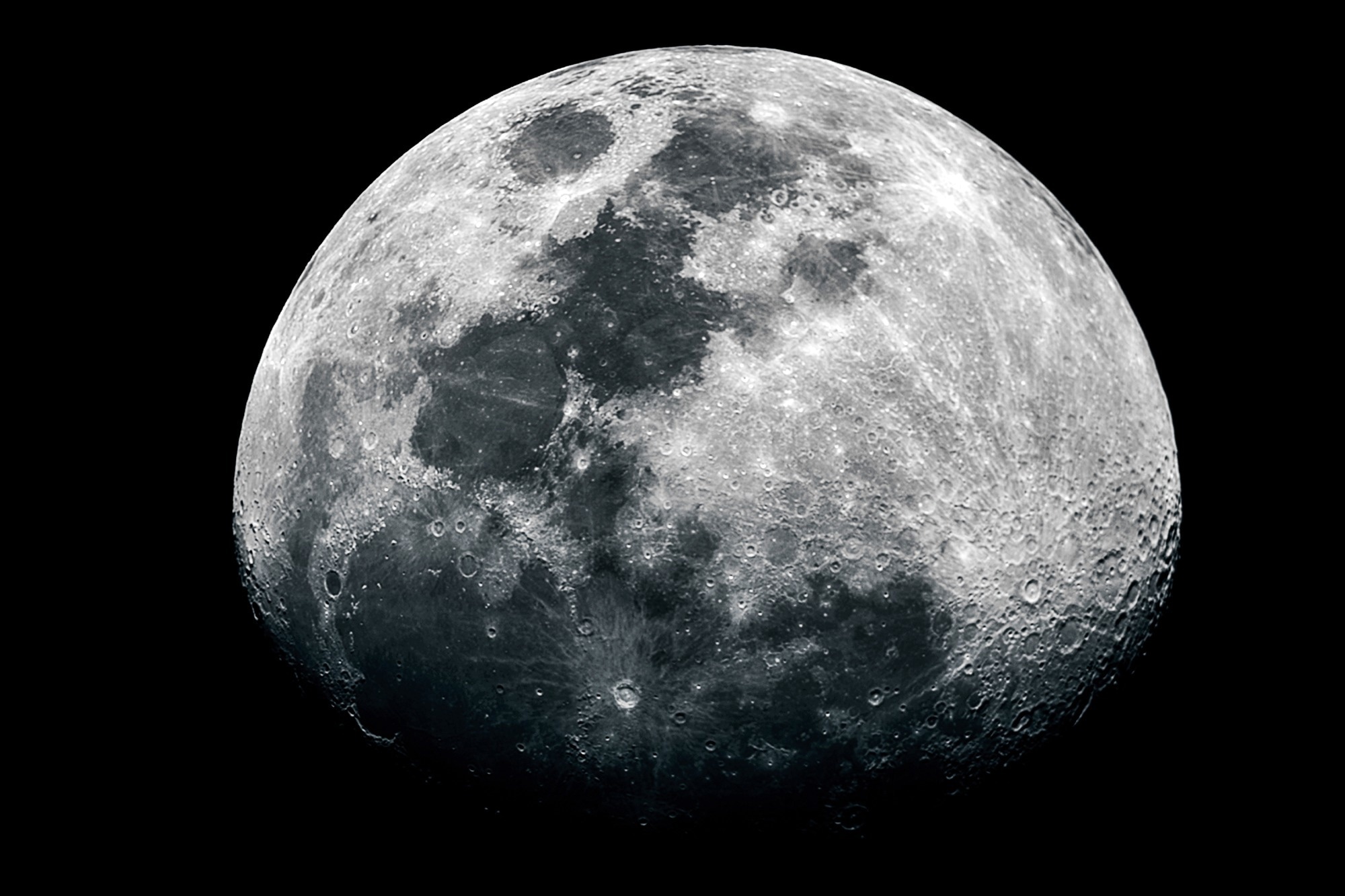
Image Credit: Domenichini Giulano/Shutterstock.com
What Are the Scientific Reasons for Returning to the Moon?
One of the strongest scientific motivations for returning to the Moon is its role as a preserved geological record of the early Solar System. The Moon has no active plate tectonics, minimal erosion, and no atmosphere-driven weathering, contrary to the Earth. This means its surface preserves impact craters and geological features dating back billions of years. Scientists can reconstruct the timeline of early planetary bombardment by studying these formations and gain an understanding of how Earth and other terrestrial planets evolved.
In this regard, the lunar South Pole is of particular interest because it contains permanently shadowed regions that are thought to trap water ice and other volatile compounds.1 Data from missions such as NASA’s Lunar Reconnaissance Orbiter and India’s Chandrayaan-1 have indicated the presence of hydrogen-rich deposits in these areas.2, 3 Water ice is scientifically valuable for understanding how volatiles are distributed in the inner Solar System, and it also has practical implications for future exploration. Missions like NASA’s Lunar Trailblazer and the joint JAXA–ISRO LUPEX rover are designed to map and analyze these polar resources in detail.
The far side of the Moon is permanently shielded from Earth’s radio-frequency emissions, making it one of the quietest locations in the inner Solar System for low-frequency observations. Researchers have proposed placing radio telescopes on or orbiting the lunar far side to study different cosmic phenomena. Such observations could provide data that cannot be obtained from Earth-based or near-Earth instruments due to atmospheric and electromagnetic interference.4
Lunar exploration also contributes to a better understanding of the Earth-Moon system as a coupled pair. Precise measurements of the Moon’s interior structure, orbital evolution, and seismic activity help refine models of tidal interactions and long-term orbital dynamics.
Download the PDF of this article
What Are the Technological and Engineering Motivations?
The Moon is a bridge for human expansion into the solar system, specifically as a precursor to Mars. The 384,400-kilometer journey to the Moon is a manageable distance for testing life-support systems and radiation shielding before attempting the multi-month transit to Mars.5 In the high-radiation, low-gravity environment of the Moon, engineers can validate the durability of hardware and the biological resilience of crews. These missions can test advanced Extravehicular Activity (EVA) suits and pressurized rovers, ensuring that the technology can withstand the abrasive nature of lunar dust and extreme temperature swings.6
In terms of In-situ resource utilization, or ISRU, research has shown that lunar regolith contains oxygen bound in metal oxides, as well as materials that could potentially be used for construction.7
Robotic autonomy and AI-guided operations are also being tested through lunar missions. Communication delays and limited direct control require surface robots to operate with better decision-making autonomy. Autonomous navigation, excavation, and assembly technologies are being developed for deployment on the Moon. These capabilities are necessary for building infrastructure such as power systems, landing pads, and habitats prior to crew arrival.8
Commercial and Strategic Implications of Lunar Return
Some private companies are developing lunar landers, surface payload services, and transportation systems, often in partnership with national space agencies. For instance, NASA’s Commercial Lunar Payload Services (CLPS) program contracts companies such as Astrobotic and Intuitive Machines to deliver scientific instruments to the Moon.
Companies like SpaceX are contributing launch and spacecraft capabilities, including systems intended to support Artemis crewed landings. Similarly, international firms such as ispace are pursuing commercial lunar landers aimed at both government and private customers.9, 10
The Moon is sometimes discussed as a potential source of materials such as helium-3 or rare earth elements, although these ideas are speculative and face significant technical and economic challenges. Current research focuses more on understanding resource distribution and extraction feasibility than on near-term exploitation.
Geopolitical dynamics also play a role in renewed lunar activity. The United States and its partners have promoted the Artemis Accords, which outline principles for cooperation, transparency, and resource utilization.11 China has also announced plans for an International Lunar Research Station, potentially in collaboration with other nations.12 Moreover, public-private partnerships are positioned to support the development of lunar infrastructure, including surface habitats, power generation systems, and potentially propellant depots.
What Scientific and Engineering Challenges Remain?
One of the major challenges for lunar missions is power generation and storage during the lunar night, which lasts approximately 14 Earth days. Solar energy systems must either store large amounts of energy or be supplemented by alternative power sources, such as small nuclear reactors, which are still under development.13
Moreover, radiation exposure and micrometeorite impacts pose risks to both humans and equipment. As the Moon lacks a protective atmosphere and magnetic field, robust shielding solutions are imperative. Long-term studies are needed to assess cumulative exposure risks for astronauts. Similarly, the fine, abrasive lunar dust can damage mechanical systems, degrade seals, and pose health risks if inhaled. Research into dust mitigation techniques, including coatings and electrostatic removal systems, is ongoing.14
Communication with assets on the lunar far side requires relay satellites or surface-based communication infrastructure. Autonomous operations must also account for limited real-time intervention from Earth.
The Moon as a Platform for Future Exploration
The goal of returning to the Moon is to build a repeatable, sustainable model for living and working off-planet. The early 2030s are expected to mark a phase where government space agencies, academic institutions, and commercial partners operate within a collaborative ecosystem. Planned missions such as Artemis III, currently planned for the latter half of the 2020s, aim to return humans to the lunar surface and establish a sustained exploration cadence.15 Scientific instruments deployed during these missions are expected to address longstanding questions in planetary science. The return to the Moon is, at its core, about developing the capabilities and knowledge essential for the next phases of planetary exploration. It serves as a proving ground for more ambitious missions deeper into the Solar System.
Want to discover practical solutions to explore the moon? Here's a great example
References
- Shearer, C. K., Sharp, Z. D., & Stopar, J. (2024). Exploring, sampling, and interpreting lunar volatiles in polar cold traps. Proceedings of the National Academy of Sciences. https://doi.org/10.1073/pnas.2321071121
- William Steigerwald. NASA’s LRO Discovers Lunar Hydrogen More Abundant on Moon’s Pole-Facing Slopes. NASA. https://www.nasa.gov/solar-system/nasas-lro-discovers-lunar-hydrogen-more-abundant-on-moons-pole-facing-slopes/
- Chandrayaan-1 / Moon Impact Probe. NASA. https://science.nasa.gov/mission/chandrayaan-1/
- Brinkerink, C. D., Arts, M. J., Bentum, M. J., Boonstra, A. J., Cecconi, B., Fialkov, A., ... & Zucca, P. (2025). The Dark Ages Explorer (DEX): a filled-aperture ultra-long wavelength radio interferometer on the lunar far side. arXiv preprint. https://doi.org/10.48550/arXiv.2504.03418
- The Moon as a Stepping Stone to Human Mars Missions. NTRS NASA. https://ntrs.nasa.gov/citations/20180007827
- Belobrajdic, B., Melone, K., & Diaz-Artiles, A. (2021). Planetary extravehicular activity (EVA) risk mitigation strategies for long-duration space missions. npj Microgravity. https://pmc.ncbi.nlm.nih.gov/articles/PMC8115028/
- Guerrero-Gonzalez, F. J., & Zabel, P. (2023). System analysis of an ISRU production plant: Extraction of metals and oxygen from lunar regolith. Acta Astronautica. https://doi.org/10.1016/j.actaastro.2022.11.050
- Chu, J., Zhang, S., Yue, Q., Huang, Y., Du, Y., & Huangfu, X. (2025). A collaborative path planning approach for multiple robots persistently building a lunar base. Acta Astronautica. https://doi.org/10.1016/j.actaastro.2025.01.014
- Commercial Lunar Payload Services. NASA. https://www.nasa.gov/commercial-lunar-payload-services/
- Missions. ispace. https://ispace-inc.com/missions
- Principles for a Safe, Peaceful, and Prosperous Future in Space. NASA. https://www.nasa.gov/artemis-accords/
- Xinhua. China unveils International Lunar Research Station details. https://english.www.gov.cn/news/202404/25/content_WS662a42bdc6d0868f4e8e66f0.html
- Kaczmarzyk, M., & Musial, M. (2021). Parametric study of a lunar base power systems. Energies. https://doi.org/10.3390/en14041141
- Zanon, P., Dunn, M., & Brooks, G. (2023). Current Lunar dust mitigation techniques and future directions. Acta Astronautica. https://doi.org/10.1016/j.actaastro.2023.09.031
- Artemis III. NASA. https://www.nasa.gov/mission/artemis-iii/
Disclaimer: The views expressed here are those of the author expressed in their private capacity and do not necessarily represent the views of AZoM.com Limited T/A AZoNetwork the owner and operator of this website. This disclaimer forms part of the Terms and conditions of use of this website.