In this interview with AZoQuantum, Steven Bell, Principal Scientist and Science Area Leader in the Nuclear Metrology Group at the National Physical Laboratory (NPL), discusses how the measurement of radioactivity is evolving to keep up with new applications in nuclear energy, medicine, and environmental monitoring.
Nuclear metrology has existed for more than a century. Has a lot changed since then?
In many respects, the fundamentals haven't changed much at all. Marie Curie sent radioactive samples to NPL for measurement more than a century ago, and today we're still doing essentially the same thing. We take samples, measure them, and issue a certificate stating the level of activity within the sample.
However, what has changed is how widely radioactivity is now used, with applications extending far beyond the laboratory to nuclear medicine, power generation, and defense. Every new application creates its own measurement challenges, so the science of nuclear metrology has evolved alongside.
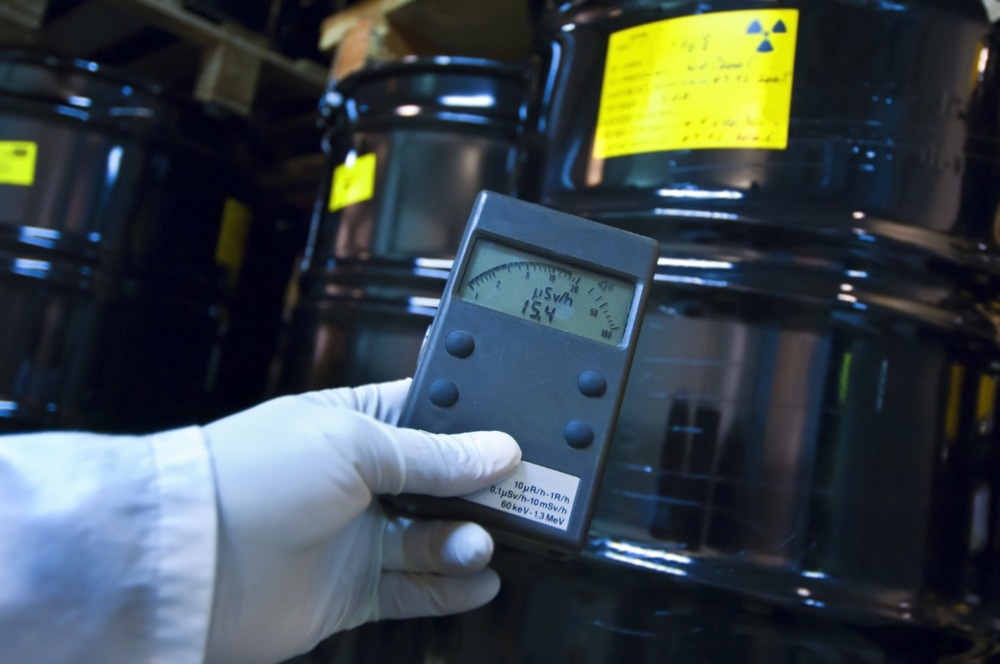
Image Credit: zlikovec/Shutterstock.com
How are these new applications changing the way radioactivity is measured?
One of the biggest shifts is that measurements often need to happen where a process is taking place, rather than in an off-site laboratory. This is particularly true for small modular reactors (SMRs), which are designed to be built more quickly and operated more efficiently than conventional nuclear power stations.
Traditionally, a large nuclear power station might have a dedicated laboratory conducting routine on-site measurements, but it’s not feasible to build and maintain a full lab at each and every SMR, since they could be distributed across different sites. Instead, automated systems and sensors will be embedded within the plant itself, providing near real-time measurements without the need to send samples away for analysis.
These measurements then feed into automated control systems, digital twins, and predictive maintenance tools; therefore, it is very important that the underlying measurement data is trustworthy. This, in turn, requires an understanding of how embedded sensors can be calibrated for their intended application and what levels of accuracy, stability, and precision are needed to deliver reliable results.
Nuclear medicine is also advancing rapidly. Why is accurate measurement so critical in this field?
Nuclear medicine is a very exciting area because we're seeing the development of new theranostic approaches in which, for example, one radioisotope identifies a disease and another, of the same element, treats it. Unlike conventional medicines, radioactive medicines are constantly changing; from the moment a radioisotope is produced, it begins to decay. This means that, by the time it's manufactured into a pharmaceutical, transported to a hospital, prepared for a patient, and finally administered, its activity has already decreased.
That's why accurate nuclear data, especially concerning the half-life, is so important. The ideal radioisotope has a half-life that's long enough to reach the patient and do its job, but short enough that it doesn't continue exposing the patient to unnecessary radiation after it has had the desired effect.
Knowing the half-life allows clinicians to calculate the exact activity, and therefore the dose, at every stage of treatment. Activity decreases exponentially over time, so accurate half-life data is essential for calculating the amount remaining at a given time, particularly for short-lived medical isotopes. One of NPL's roles is to measure these nuclear properties as accurately as possible, providing the reference data that researchers and clinicians rely on when developing new radiopharmaceuticals.
Does the development of new radioisotopes create new metrology challenges?
In dimensional metrology, for example, a single ruler can measure many objects. Radioactivity measurements are more complex, however, because each radionuclide emits characteristic types of radiation with different energies and therefore requires its own reference standard. Those standards also decay over time, so they have to be replaced regularly to maintain traceability.
At NPL, that often involves working with specialist facilities such as CERN to produce the isotopes before we can characterize them and provide the reference data used in research.
Where else is nuclear metrology finding new applications?
We're also seeing new approaches to environmental monitoring. One key example is lightweight radiation detectors mounted on drones, which can survey contaminated or inaccessible areas more safely and efficiently than traditional methods. This is especially important following nuclear incidents.
One project I'm involved in is developing highly sensitive, field-deployable systems for measuring carbon-14 in the atmosphere. Measuring the carbon-14 to carbon-12 ratio in carbon dioxide allows us to distinguish between fossil-derived emissions and carbon released from more recent biological sources. Historically, these measurements have relied on collecting samples and sending them to specialist laboratories, but new laser-based techniques could enable near-real-time measurements in the field, opening new opportunities for environmental and climate research.
How does NPL ensure its metrology capabilities keep pace with emerging technologies?
We provide calibration standards and measurement services that meet today’s demands, but new technologies often create new measurement challenges that don't have an established solution. Our role is to work with researchers and industry to develop the methods and standards needed to solve those challenges.
Once those technologies become widely used, the work we've carried out in the early stages becomes the routine measurement service that industry depends on. We always aim to support the full lifecycle of an application, from early research through to long-term operation. That's one of the most satisfying parts of the job: seeing measurement science that started as research become something organizations rely on every day.
About Steven Bell
Dr Steven Bell is a Principal Scientist and Science Area Leader in the Nuclear Metrology Group at the National Physical Laboratory (NPL), where he leads the Radioactive Gas Metrology Laboratory. His work focuses on radioactive gas standards, environmental monitoring, and instrument calibration, with research spanning nuclear preparedness, radiation protection, and emerging applications of nuclear metrology, such as the tritium fuel cycle in nuclear fusion.

This information has been sourced, reviewed, and adapted from materials provided by National Physical Laboratory (NPL).
For more information on this source, please visit National Physical Laboratory (NPL).
Disclaimer: The views expressed here are those of the interviewee and do not necessarily represent the views of AZoM.com Limited (T/A) AZoNetwork, the owner and operator of this website. This disclaimer forms part of the Terms and Conditions of use of this website.