AZoQuantum speaks with Aditya Singh, founding member of BQP, about the rapid growth of New York’s quantum ecosystem and the role regional collaboration plays in accelerating quantum commercialization. Following the announcement of the Advancing Regional Quantum Hubs Act, Singh discusses why Upstate New York is emerging as a major center for quantum innovation, the importance of partnerships between startups, universities, industry, and defense organizations, and how initiatives like this could help turn promising quantum technologies into practical solutions for real-world applications.
Can you introduce yourself, your role at BQP, and how your work connects to New York’s growing quantum ecosystem?
I’m Aditya Singh, a founding member of BQP, where we focus on building quantum-native engineering simulation software designed to help industries solve some of the world’s most computationally intensive problems. My work sits at the intersection of advanced physics, engineering, and commercialization, helping translate quantum computing from a promising research field into practical tools industries can actually use.
A major part of that work is deeply connected to New York’s growing quantum ecosystem. Upstate New York has become a uniquely collaborative environment where startups, research institutions, government agencies, and enterprise partners are all contributing to the same long-term vision. Through relationships with organizations like AFRL Rome, universities across the region, and major technology partners, we’ve been able to develop and validate technologies in an ecosystem that encourages both innovation and real-world application.
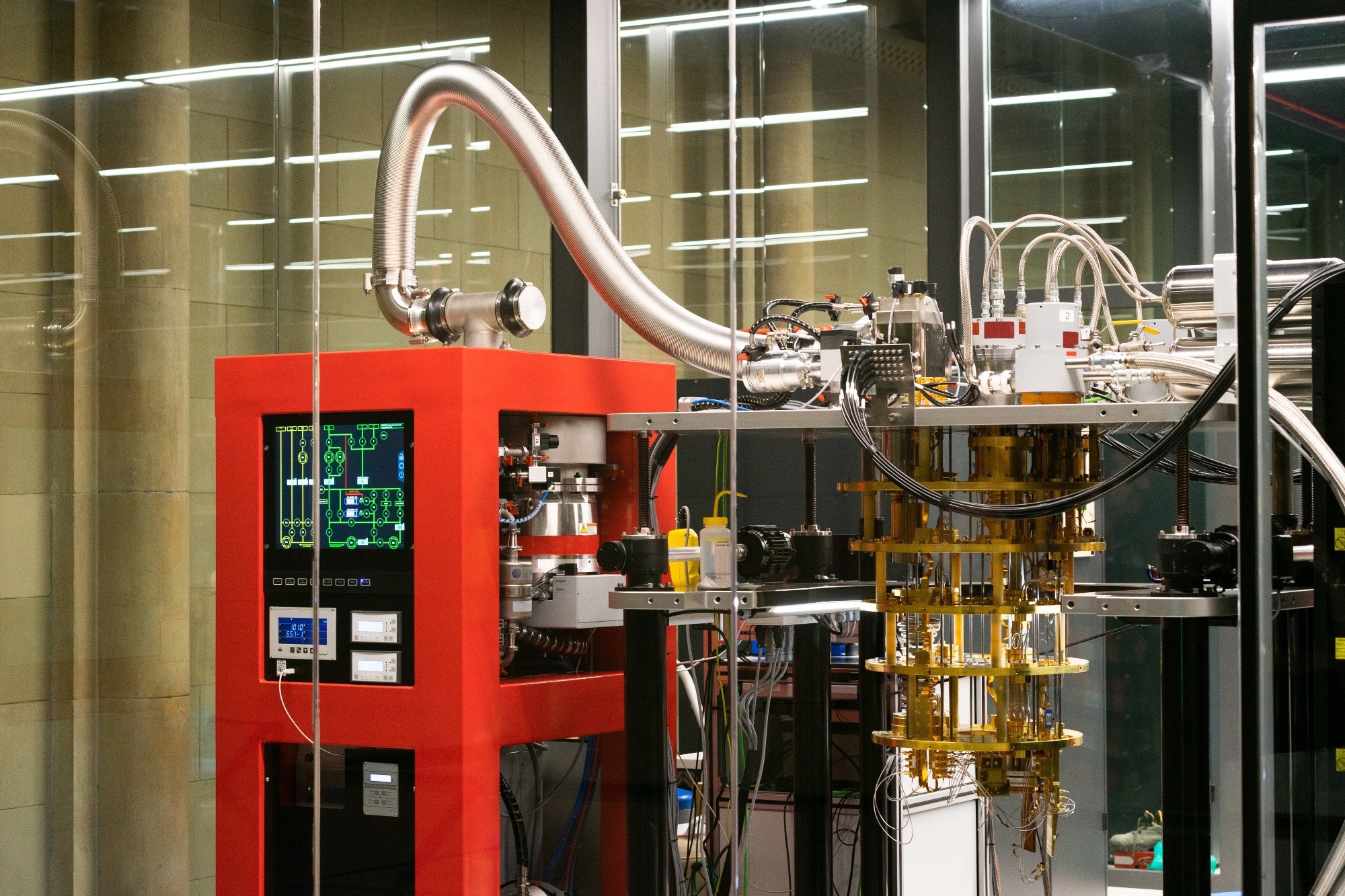
Image credit: Germanru/Shutterstock.com
What did joining Kirsten Gillibrand at the Innovare Advancement Center for the Advancing Regional Quantum Hubs Act announcement mean for BQP and the region?
Being part of that announcement alongside Senator Gillibrand at the Innovare Advancement Center was incredibly meaningful for both BQP and the broader region. It signaled that quantum technology is no longer viewed as a distant scientific concept, but as a strategic national priority with real economic and security implications.
For companies like BQP, it was also validation that the work happening across Upstate New York is being recognized at the federal level. The region has spent years building the infrastructure, partnerships, and talent pipeline needed to support quantum innovation. Seeing that acknowledged publicly helps reinforce confidence among startups, investors, researchers, and enterprise partners that this ecosystem is positioned for long-term growth.
Why is Upstate New York emerging as one of the most important quantum hubs in the United States?
Upstate New York has several advantages that make it uniquely positioned to lead in quantum technology. First, the region already has a strong foundation in advanced manufacturing, semiconductors, aerospace, defense, and high-performance computing. Quantum naturally builds on many of those existing strengths.
Second, there’s an unusually collaborative network forming across the region. You have research universities, national labs, defense organizations, startups, and large enterprise technology companies all operating within relatively close proximity along the New York Thruway corridor. That density creates opportunities for faster collaboration and knowledge sharing.
Finally, there’s a growing recognition that innovation does not need to be concentrated exclusively in Silicon Valley or other coastal tech centers. Upstate New York offers world-class technical talent, strong institutional support, and a lower barrier for startups looking to scale.
Download the PDF of the interview here
Why is collaboration between startups, universities, and defense organizations across the NY Thruway corridor so important for quantum technology development?
Quantum technology is far too complex for any single organization to advance alone. The field requires expertise across physics, computer science, engineering, manufacturing, cybersecurity, and applied mathematics. Collaboration is what allows those disciplines to come together effectively.
The NY Thruway corridor is becoming powerful because each part of the ecosystem contributes something different. Universities drive foundational research and talent development. Startups move quickly to commercialize and apply emerging technologies. Defense organizations help identify mission-critical problems where quantum technologies can create real impact.
When those groups collaborate closely, innovation moves faster and becomes much more practical. That is especially important in quantum, where the challenge is not just building the technology, but integrating it into usable workflows and real operational environments.
How do partnerships with organizations like AFRL, NVIDIA, IBM, Intel, and MathWorks help accelerate quantum commercialization?
Partnerships are essential because commercialization requires an entire ecosystem, not just isolated breakthroughs. Organizations like NVIDIA, IBM, Intel, and MathWorks bring infrastructure, computing platforms, developer ecosystems, and enterprise credibility that help bridge the gap between research and adoption.
For BQP specifically, these collaborations allow us to develop solutions that work within the engineering and simulation environments industries already trust and use today. That is critical because most enterprises are not looking to completely rebuild their workflows overnight. They want pathways to gradually integrate quantum capabilities into existing systems.
Partnerships with AFRL are equally important because they provide access to highly sophisticated real-world use cases where advanced simulation and optimization can have immediate value. Those environments push the technology forward in ways that purely theoretical research often cannot.
What practical impact could the Advancing Regional Quantum Hubs Act have on startups like BQP?
The biggest impact is that it helps create the infrastructure needed for long-term growth. Quantum companies often face challenges around talent access, compute resources, testing environments, funding, and commercialization support. Federal investment and coordination can help strengthen all of those areas.
For startups, programs like this can also reduce barriers to collaboration between academia, government, and industry. That matters because quantum commercialization will require sustained partnerships over many years, not just isolated funding cycles.
Just as importantly, legislation like this sends a broader signal that the United States is serious about building regional quantum ecosystems. That confidence can help attract additional private investment, talent, and enterprise participation into regions like Upstate New York.
How important are defense partnerships and institutions like AFRL Rome in helping quantum startups move from research to real-world applications?
They are extremely important because defense organizations are often among the earliest adopters of advanced technologies with long-term strategic value. Institutions like AFRL Rome provide both technical expertise and highly demanding operational environments that help startups validate whether their technologies can perform outside the lab.
For quantum companies, that kind of validation is critical. It helps move the conversation from theoretical potential to measurable impact. Defense partnerships also create opportunities to work on problems involving optimization, sensing, secure communications, and simulation that align naturally with the strengths of quantum technologies.
Beyond the technical side, AFRL Rome has also helped foster a broader innovation ecosystem in the region by connecting startups, researchers, and industry partners around shared goals.
How are cities like Syracuse and Rome changing perceptions that quantum innovation is limited to major coastal tech hubs?
Cities like Syracuse and Rome are proving that world-class innovation can happen anywhere there is strong talent, collaboration, and institutional support. The traditional narrative has often centered around a handful of coastal cities, but quantum development requires specialized expertise and long-term ecosystem building more than geographic prestige.
What’s happening in Central New York demonstrates that smaller cities can become major innovation centers when universities, government agencies, startups, and industry align around a common vision. There is also a strong sense of community and collaboration here that can sometimes be harder to achieve in more crowded tech ecosystems.
As more companies scale successfully in the region, perceptions will continue to shift from “emerging ecosystem” to “established innovation corridor.”
Why is integrating quantum technologies into existing engineering and simulation workflows critical for broader industry adoption?
Industry adoption will only happen if quantum technologies become accessible and practical for engineers and enterprises. Most companies are not looking for entirely separate quantum workflows. They want tools that integrate into the systems and software environments they already use.
That is why BQP focuses heavily on bridging classical and quantum computing environments. The future is likely to be hybrid for a long time, where quantum technologies enhance existing high-performance computing workflows rather than replace them outright.
If adoption requires organizations to completely reinvent their engineering stack, progress will be much slower. But if quantum capabilities can integrate naturally into familiar workflows, adoption becomes much more realistic and scalable.
Could New York’s quantum ecosystem become a national model for collaboration between government, universities, startups, and enterprise partners?
Absolutely. One of the most exciting things about New York’s ecosystem is that it already reflects the kind of cross-sector collaboration quantum commercialization will require nationally.
You have universities conducting cutting-edge research, startups rapidly commercializing new technologies, defense organizations helping validate real-world applications, and enterprise technology companies providing the infrastructure needed for scale. That combination is incredibly powerful.
What makes the ecosystem especially compelling is that it is not being built around a single institution or company. It is a networked model of collaboration. If successful, it could absolutely serve as a blueprint for how the United States develops other advanced technology ecosystems in the future.
Need a refresher on Bloch Spheres? We're talking about them here
About the Speaker
Aditya Singh is a Founding Member at
BQP, a deep-tech company focused on the next generation of engineering simulation.
Most engineering software today still runs on math developed in the 1980s. For decades, the industry has thrown more CPUs, GPUs, and money at the same old algorithms, expecting a breakthrough. But throwing hardware at a math problem is a bandage, not a cure. At BQP, Aditya is focused on the fundamental shift required for the next decade of engineering: moving from classical solvers to future-proof, quantum-ready algorithms. The team built BQPhy® - the world’s first quantum-powered simulation suite - to help mission-critical industries solve complex engineering simulation challenges that are currently “computationally impossible” for classical computers. BQP is not just making software faster; it is rewriting the mathematical engine to handle the complexity of the future. Prior to BQP, Aditya’s time at ZS was spent at the intersection of enterprise strategy and complex data systems. It was a masterclass in how global organizations make high-stakes decisions. He saw firsthand that even the best technology fails if it does not drive a P&L result. He now applies that experience to ensure BQP’s work is not just an academic exercise, but a practical solution to real bottlenecks in R&D.
Disclaimer: The views expressed here are those of the interviewee and do not necessarily represent the views of AZoM.com Limited (T/A) AZoNetwork, the owner and operator of this website. This disclaimer forms part of the Terms and Conditions of use of this website.