Drug resistance is a major biomedical challenge that undermines treatments for infectious diseases, cancer, and viral infections worldwide. Classical computational models fail to capture the full molecular complexity underlying these processes due to inherent approximations and computational constraints. Quantum models offer a computationally advanced framework, enabling more accurate simulation of molecular interactions and improved understanding of drug-target binding and resistance mechanisms.
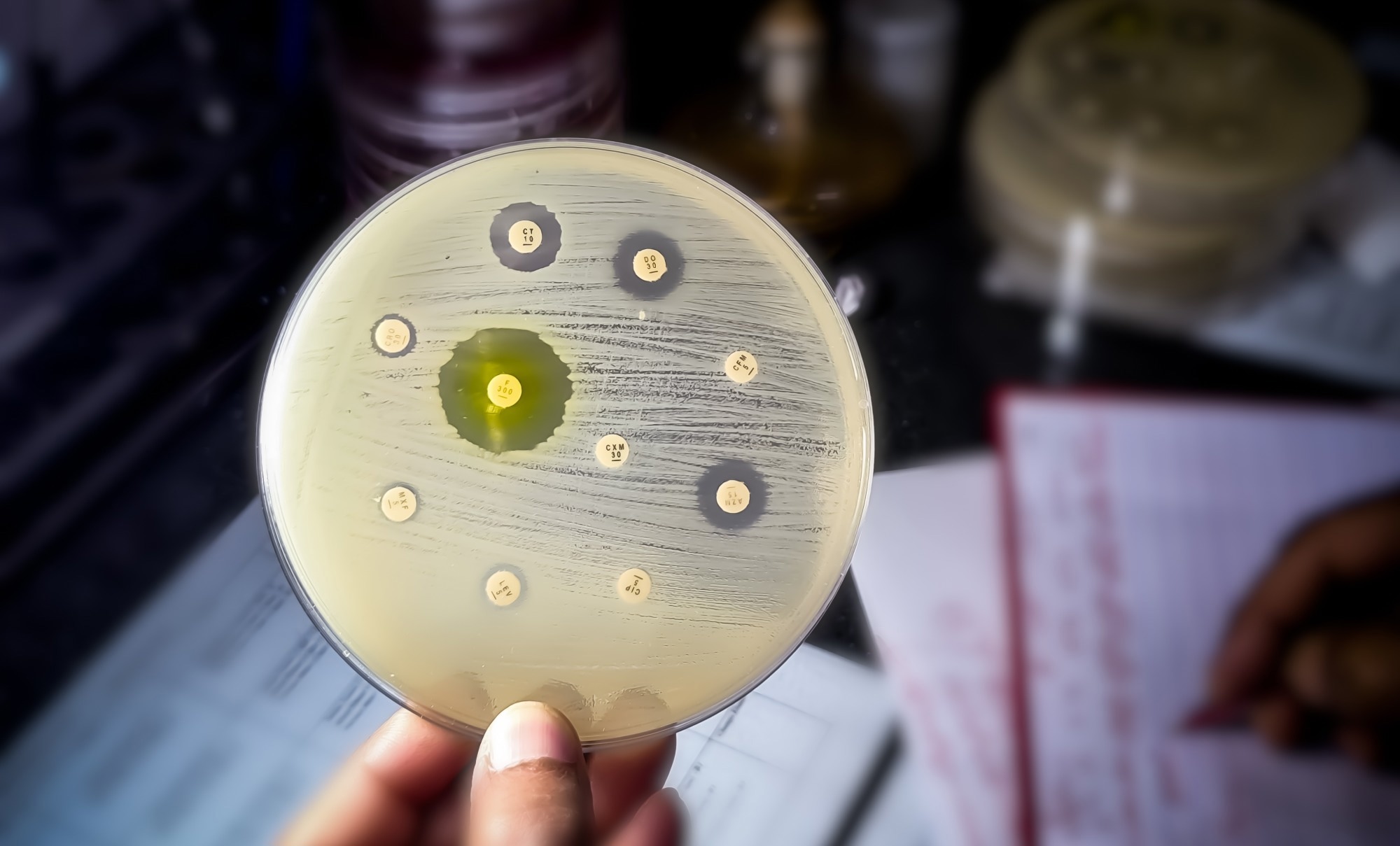
Image Credit: Saiful52/Shutterstock.com
Why Is It Difficult to Model Drug Resistance?
Drug resistance represents an adaptive biological response in which cells, pathogens, or organisms lose sensitivity to therapeutic agents that were previously effective, driven by evolutionary selection that favors survival of resistant variants under drug pressure.
At the molecular level, this resistance arises through multiple mechanisms, including enzymatic drug inactivation, reduced intracellular accumulation via decreased uptake or active efflux, and structural modification of drug targets that lowers binding affinity while preserving biological function.
Additional pathways include target overproduction, metabolic bypass mechanisms that circumvent inhibited steps, and target mimicry that sequesters drugs away from their intended binding sites.
These mechanisms frequently act in combination, producing robust and multifactorial resistance phenotypes that reduce therapeutic efficacy and complicate long-term disease management across infectious diseases, oncology, and other biological systems.1,2
Limitations in Modeling
Modeling drug resistance presents significant challenges due to the dynamic, heterogeneous, and multiscale nature of biological systems, combined with fundamental limitations of classical computational approaches.
Biological populations evolve continuously under therapeutic pressure, while rare mutations in a small subset of cells can rapidly dominate a population. This dynamic adaptive behavior introduces significant stochasticity, making resistance trajectories difficult to predict using deterministic models alone.
Limitations in experimental data, particularly the absence of real-time, patient-specific measurements, further reduce model reliability, making drug resistance modeling a problem that requires integrating evolutionary biology, multiscale modeling, and quantum-level accuracy.3,4
What Can Quantum Models do Against Drug Resistance?
Quantum models are computational methods grounded in quantum mechanics that provide a more physically rigorous basis for simulating molecular systems than classical approaches.
By operating at the level of electronic structure, they capture phenomena such as electron correlation, charge transfer, and quantum tunneling that directly influence how drugs bind to their targets and how mutations alter those interactions.
Quantum Chemical Models
Quantum chemical models describe drug-target interactions by calculating molecular electronic structure using methods such as Density Functional Theory and wavefunction-based approaches.
These models quantify binding energies, charge distributions, and orbital interactions, which are directly affected by mutations in proteins, providing atomistic precision that classical force-field methods cannot resolve.5
Quantum Mechanics/Molecular Mechanics (QM/MM) Hybrid Models
QM/MM models integrate quantum mechanics for the active site with molecular mechanics for the surrounding biomolecular environment, enabling simulation of large biological systems at manageable computational cost.
Drug resistance mechanisms are analyzed by examining how mutations influence both local electronic structure and global conformational behavior, making this approach essential for studying enzymatic targets and protein-ligand complexes in realistic biological conditions.
Quantum Machine Learning Models
Quantum machine learning models combine quantum computational principles with classical learning algorithms to analyze complex biomedical datasets, encoding high-dimensional genomic, proteomic, and pharmacological data using quantum states and circuits.
They enable the classification of resistant versus sensitive phenotypes and the prediction of therapeutic response with greater efficiency, exploiting the ability of quantum systems to represent complex correlations that are difficult to capture with classical architectures.6
Quantum Optimization and Generative Models
Quantum optimization models, including quantum annealing, solve combinatorial problems in drug discovery and resistance analysis by efficiently identifying optimal molecular configurations.
Quantum generative models complement this capability by designing new molecular structures through probabilistic sampling over quantum superposition states, supporting the development of resistance-resilient therapeutics by identifying compounds less susceptible to mutation-induced loss of efficacy.7
Download the PDF of this article
Applications in Drug Discovery and Development
New drugs must be developed continuously to keep pace with evolving drug resistance, but this process is constrained by the vastness of chemical space and the limits of classical computational methods in accurately modeling molecular interactions.
Quantum computing helps address these challenges by representing molecular systems through qubits in superposition and entanglement. This allows for a more complete representation of electronic configurations, improving the accuracy of molecular simulations and supporting the exploration of drug candidates with lower resistance potential.
Protein Binding Site Characterization and Design
Protein-binding site characterization helps drug discovery by identifying and characterizing regions where therapeutic molecules can interact effectively with target proteins. Quantum models improve this process by using Hamiltonian-based representations in small active spaces to accurately capture electron correlation, polarization, and protonation effects that classical methods often miss.
De Novo Ligand Generation and Protein-Ligand Interaction Modeling
Quantum models improve protein–ligand interaction modeling by capturing electronic effects such as electron correlation, polarization, and protonation states that classical methods often overlook.
The same quantum framework also extends to de novo ligand generation, enabling more accurate evaluation of molecular candidates through electronic-structure-aware optimization.
Together, these capabilities support more precise identification of high-affinity drug candidates while improving the reliability of structure-based drug design workflows across large and complex chemical spaces.
Clinical Trial Portfolio Management and Site Selection
Clinical trial portfolio management and site selection benefit from improved optimization of complex, multi-constraint decision-making problems involving cost, geography, recruitment potential, and regulatory requirements.
Quantum computing is applied by encoding these constraints into mathematical formulations and using quantum annealing or variational algorithms to explore solution spaces more efficiently in certain regimes. This enables more efficient identification of optimal trial configurations, improving resource allocation and accelerating clinical development timelines under complex operational constraints.8
Drug Sensitivity Prediction in Heterogeneous Disease Settings
Accurate prediction of drug response in heterogeneous diseases remains challenging for classical machine learning due to high-dimensional, imbalanced, and redundant biological datasets.
Multiple myeloma is a key example, characterized by strong biological variability that leads to inconsistent treatment response and frequent drug resistance. A recent study proposed the QProteoML framework, which applies quantum machine learning methods including quantum kernel classification, quantum dimensionality reduction, quantum annealing for feature selection, and quantum generative models for data balancing.
This approach improves drug-sensitivity prediction and enhances the identification of resistant patient subgroups, supporting more accurate personalized treatment strategies.9
Commercial Development
Gero’s Hybrid Quantum-Classical Generative Framework
Gero has demonstrated a hybrid quantum-classical machine learning framework that integrates a discrete variational autoencoder with quantum annealing hardware for generative chemistry.
The model, trained on a subset of the ChEMBL database, generated 2,331 novel chemical structures, with less than 1% showing high similarity to the training data, indicating strong novelty in the explored chemical space.10
Bayer Quantum Simulation Drug Discovery
Bayer AG, in collaboration with Google Cloud, is applying Tensor Processing Units to accelerate density functional theory calculations for large-scale quantum chemistry workflows.
The approach aims to improve protein-ligand interaction modeling at an industrial scale by increasing computational throughput and enabling more accurate simulation of molecular systems in drug discovery.11
Quantum for Bio by PASQAL
PASQAL and Qubit Pharmaceuticals are developing hybrid quantum-classical algorithms to optimize the placement of water molecules within protein binding sites using neutral-atom quantum computing hardware.
The framework targets improved modeling of aqueous protein environments and aims to reduce drug candidate screening time by more than 50 percent through enhanced simulation efficiency.12
Current Limitations and Challenges
Quantum models remain constrained by interconnected computational and practical limitations.
Scalability is a central issue, as quantum-mechanical calculations increase steeply in complexity with system size, making a full electronic-level treatment of large biomolecular systems impractical and necessitating hybrid approaches such as QM/MM, which introduce approximations that influence predictive reliability.
Current hardware limitations compound these computational challenges, as existing quantum computers have a limited number of qubits and remain highly susceptible to noise and decoherence.
Accurate prediction of drug resistance further requires consistent incorporation of molecular-level interactions, biological dynamics, and experimental observations, and achieving coherence across these scales remains challenging, complicating the development of unified and predictive quantum modeling frameworks.13
Where Is the Field Heading?
Quantum-enabled drug discovery is moving toward fault-tolerant quantum computing systems capable of handling larger, more biologically realistic molecular simulations, supported by continued advances in hybrid quantum-classical algorithms that balance accuracy and scalability.
These developments are expected to integrate quantum methods into pharmaceutical pipelines, improving predictive accuracy and supporting adaptive drug design and personalized medicine for addressing drug resistance in infectious diseases and cancer.
Quantum sensors are also a huge game changer in drug discovery. Find out why here
References and Further Reading
- Yilmaz, N. K., & Schiffer, C. A. (2021). Introduction: Drug Resistance. Chemical Reviews, 121(6), 3235. https://doi.org/10.1021/acs.chemrev.1c00118
- https://courses.lumenlearning.com/suny-microbiology/chapter/drug-resistance/
- Sun, X., & Hu, B. (2017). Mathematical modeling and computational prediction of cancer drug resistance. Briefings in Bioinformatics, 19(6), 1382. https://doi.org/10.1093/bib/bbx065
- Ward, R. A., Fawell, S., Floc’h, N., Flemington, V., McKerrecher, D., & Smith, P. D. (2020). Challenges and opportunities in cancer drug resistance. Chemical reviews, 121(6), 3297-3351. https://doi.org/10.1021/acs.chemrev.0c00383
- Guan, H., Sun, H., & Zhao, X. (2025). Application of Density Functional Theory to Molecular Engineering of Pharmaceutical Formulations. International Journal of Molecular Sciences, 26(7), 3262. https://doi.org/10.3390/ijms26073262
- Sagingalieva, A., Kordzanganeh, M., Kenbayev, N., Kosichkina, D., Tomashuk, T., & Melnikov, A. (2023). Hybrid Quantum Neural Network for Drug Response Prediction. Cancers, 15(10). https://doi.org/10.3390/cancers15102705
- Kwon, T., & Kim, H. (2025). Quantum biological convergence: Quantum computing accelerates KRAS inhibitor design. Signal Transduction and Targeted Therapy, 10(1), 152. https://doi.org/10.1038/s41392-025-02239-2
- Zhou, Y., Chen, J., Cheng, J., Cao, X., Zhang, Y., Karemore, G., Zitnik, M., Chong, F. T., Liu, J., Fu, T., & Liang, Z. (2026). Quantum-machine-assisted drug discovery. Npj Drug Discovery, 3(1), 1. https://doi.org/10.1038/s44386-025-00033-2
- Priyadharshini, M., Raju, B. D., Banu, A. F., Kumar, P. J., Murugesh, V., & Rybin, O. (2025). A quantum machine learning framework for predicting drug sensitivity in multiple myeloma using proteomic data. Scientific Reports, 15(1), 26553. https://doi.org/10.1038/s41598-025-06544-2
- Gircha, A. I., Boev, A. S., Avchaciov, K., Fedichev, P. O., & Fedorov, A. K. (2023). Hybrid quantum-classical machine learning for generative chemistry and drug design. Scientific Reports, 13(1), 8250. https://doi.org/10.1038/s41598-023-32703-4
- Bayer. (2023). Bayer to Accelerate Drug Discovery with Google Cloud’s High-Performance Compute Power. https://www.bayer.com/media/en-us/bayer-to-accelerate-drug-discovery-with-google-clouds-high-performance-compute-power/
- PASQAL. (2023). French start-ups Pasqal and Qubit Pharmaceuticals join with Unitary Fund to Win Wellcome Trust’s “Quantum for Bio” Program. https://www.pasqal.com/newsroom/pasqal-and-qubit-pharmaceuticals-partnership/
- Niazi, S. K. (2025). Quantum Mechanics in Drug Discovery: A Comprehensive Review of Methods, Applications, and Future Directions. International Journal of Molecular Sciences, 26(13). https://doi.org/10.3390/ijms26136325
Disclaimer: The views expressed here are those of the author expressed in their private capacity and do not necessarily represent the views of AZoM.com Limited T/A AZoNetwork the owner and operator of this website. This disclaimer forms part of the Terms and conditions of use of this website.