A lack of temporal resolution and consistent spatial sensitivity has long limited drug discovery pipelines in their ability to assess elusive biomarkers tied to high-priority targets, including cancers and neurodegenerative disorders.1 As biofluorescent tags begin to saturate their functionality2, research groups are beginning to adopt a multidisciplinary approach to push the pharmacological boundaries with nanoscale diamond quantum biosensors.
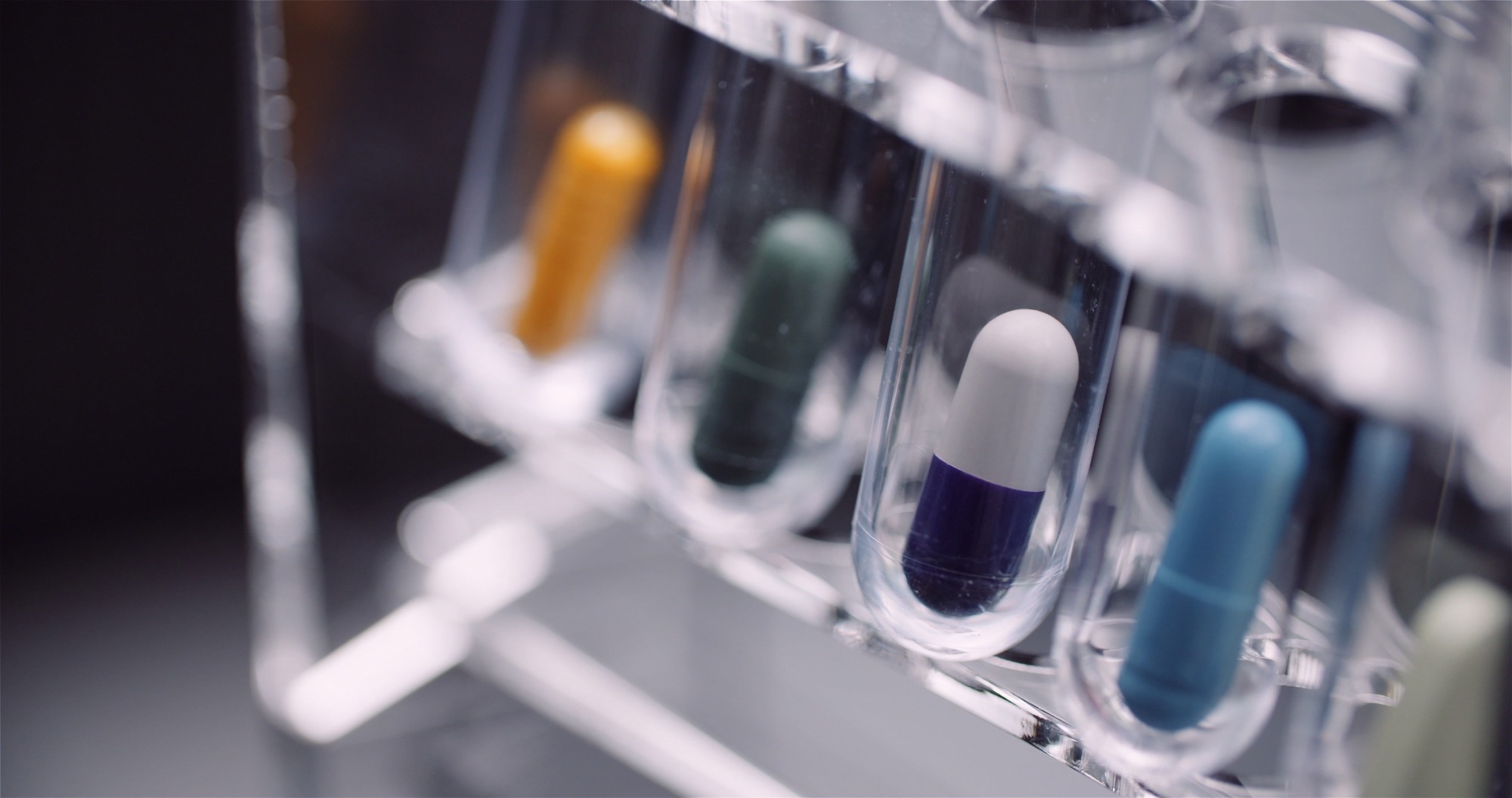
Image Credit: simplystocker/Shutterstock.com
Why Diamonds?
The physics behind diamond-based quantum sensing relies not explicitly on the carbon structure, but rather on specific impurities introduced via plasma irradiation and ion bombardment during the manufacturing process. Diamonds used for quantum sensing are grown and processed in a way that introduces a specific structure into their carbon lattice, known as Nitrogen-Vacancy (NV) centre.3,4
This structure has quantum properties that makes it fluorescent under green light excitation, with the fluorescence intensity being dependent on the surrounding environment; subtle changes in temperature, pressure or electromagnetic profile around the diamond changes the intensity of the emission when modulated with microwave radiation.4–6
This makes NV nanodiamonds extremely useful in probing systems at the nanoscale, where conventional optical probes fail to provide stable readouts. When bound to targets, these sensors can report events through measurable changes in fluorescence.7,8 Such capabilities open a route toward real-time monitoring of transient or rapid interactions that were previously inaccessible.
How are They Made?
Quantum diamond sensors begin their life as highly pure synthetic diamonds grown in controlled environments using chemical vapor deposition. During fabrication, nitrogen atoms are deliberately introduced into the crystal lattice. The diamond is then exposed to high-energy irradiation, which displaces carbon atoms and creates vacancies within the structure. When the material is subsequently annealed at high temperature, these vacancies migrate through the lattice and pair with nearby nitrogen atoms, forming the Nitrogen-Vacancy centers that power quantum sensing. The diamond is then milled into nanoscale particles and chemically functionalized, allowing the sensors to interface directly with the sample.4,6,9,10
The diamond particles are commercially available from the biotech reagent market giants like Thermo Fisher11 or Sigma Aldrich.12 The fluorescent nanodiamonds are sold in variety of sizes, buffers and different surface functionalization. Shall the researchers have a specific enquiry about custom surface chemistry or size, companies such as Adamas Nano13 already provide those services.
Download the PDF of this article here
Entry into Drug Discovery
Diamond quantum sensing first demonstrations emerged from physics laboratories, where researchers focused on fundamental science of nitrogen-vacancy centers to measure tiny signals from electronic materials under tightly controlled laboratory conditions.14,15 As the technology matured, researchers began to realize that the same sensitivity could be valuable far beyond condensed-matter physics. The ability of NV centers to respond to subtle environmental changes made them attractive tools for studying systems where conventional probes struggle to deliver stable signals. Researchers began embedding nanodiamonds into liquids, cells and biological membranes.16,17 This gradually demonstrated that the sensors retained their quantum properties even in crowded biological environments.
At that point, quantum sensing began to intersect with drug discovery. If a nanodiamond could reliably report local changes in its surroundings, it could also reveal molecular interactions such as binding events or conformational changes in receptors or proteins. Among the most important drug targets, for example, are G-protein-coupled receptors (GPCRs), a large class of membrane proteins responsible for transmitting signals across the cell membrane. Approximately 40% of approved drugs act through GPCR pathways, making them a central focus of pharmaceutical research.18,19 Optically stable, non-bleaching reporters would allow for in-depth study of functional recruitment and receptor-ligand kinetics in GPCRs, crucial variables in new drug development.2,20 Over time, this idea evolved into a new sensing paradigm of using quantum diamonds not simply as fluorescent labels, but as nanoscale reporters capable of tracking drug-target interactions in real time.7,8 However, this hypothetically efficient method has practical challenges that need to be addressed.
Challenges
Despite promising hypothetical advantages, integrating nanodiamond sensors into biological systems has presented several practical challenges. Primarily, diamond nanoparticles possess a reduced spin quality of NV centers as compared to the bulk diamonds, which lowers sensing sensitivity and signal stability. This effect is largely caused by surface defects and spin impurities that disturb the quantum states of the NV center, negligible in large chips but particularly relevant in small particles used for biological experiments.3,21 In addition, nanodiamonds tend to aggregate in biological buffers, complicating targeting and reducing measurement reproducibility.22,23
Researchers are actively exploring strategies of overcoming these barriers. One approach focuses on improving diamond material quality. For example, isotopically purified diamond with controlled nitrogen concentrations can produce more stable NV centers.10 Another way of tackling the problem involves surface engineering, where chemical treatments or coatings reduce magnetic noise and improve quantum coherence.21,24 While still in development phase, these additions to nanodiamond technology are a promising step towards advancing quantum biosensors from experimental demonstrations into viable tools for drug discovery pipelines.
Future of Quantum Biosensing
As material engineering and surface chemistry continue to improve, quantum diamond sensors can move beyond proof-of-principle demonstrations into practical biomedical tools. Their ability to detect extremely small environmental changes opens opportunities for monitoring molecular interactions that are currently invisible to conventional assays. In drug discovery, this could enable real-time tracking of receptor activation, protein binding and exploration of temporal resolution for rapid or long-term effects. Looking further ahead, nanoscale quantum sensors may also support diagnostics. Healthcare routines can be advanced to detect disease-related biomarkers in complex biological fluids with unprecedented sensitivity and minimal invasiveness. These developments position quantum biosensing as a promising bridge between quantum technology and next-generation medicine.
Conclusion
Quantum biosensing represents a meeting point of physics, nanotechnology and pharmacology. What began as a fundamental study of defects in diamond crystals has steadily evolved into a promising platform for probing biological systems at the nanoscale. While technical challenges remain, continued advances in material engineering and surface chemistry are working towards bringing the technology closer to real-world applications, where quantum sensors may become a new standard in pharmacology and drug development.
We discuss how simulating chemistry at the quantum level can help the pharma industry here
Bibliography
- Lindner JR, Link J. Molecular Imaging in Drug Discovery and Development. Circ Cardiovasc Imaging. 2018;11(2):e005355. doi:10.1161/CIRCIMAGING.117.005355
- Hsiao WWW, Hui YY, Tsai PC, Chang HC. Fluorescent Nanodiamond: A Versatile Tool for Long-Term Cell Tracking, Super-Resolution Imaging, and Nanoscale Temperature Sensing. Acc Chem Res. 2016;49(3):400-407. doi:10.1021/acs.accounts.5b00484
- Schirhagl R, Chang K, Loretz M, Degen CL. Nitrogen-Vacancy Centers in Diamond: Nanoscale Sensors for Physics and Biology. Annu Rev Phys Chem. 2014;65(1):83-105. doi:10.1146/annurev-physchem-040513-103659
- Doherty MW, Manson NB, Delaney P, Jelezko F, Wrachtrup J, Hollenberg LCL. The nitrogen-vacancy colour centre in diamond. Phys Rep. 2013;528(1):1-45. doi:10.1016/j.physrep.2013.02.001
- Degen CL, Reinhard F, Cappellaro P. Quantum sensing. Rev Mod Phys. 2017;89(3):035002. doi:10.1103/RevModPhys.89.035002
- Tisler J, Balasubramanian G, Naydenov B, et al. Fluorescence and Spin Properties of Defects in Single Digit Nanodiamonds. ACS Nano. 2009;3(7):1959-1965. doi:10.1021/nn9003617
- Ermakova A, Pramanik G, Cai JM, et al. Detection of a Few Metallo-Protein Molecules Using Color Centers in Nanodiamonds. Nano Lett. 2013;13(7):3305-3309. doi:10.1021/nl4015233
- Perona Martínez F, Nusantara AC, Chipaux M, Padamati SK, Schirhagl R. Nanodiamond Relaxometry-Based Detection of Free-Radical Species When Produced in Chemical Reactions in Biologically Relevant Conditions. ACS Sens. 2020;5(12):3862-3869. doi:10.1021/acssensors.0c01037
- Liang Y, Ozawa M, Krueger A. A General Procedure to Functionalize Agglomerating Nanoparticles Demonstrated on Nanodiamond. ACS Nano. 2009;3(8):2288-2296. doi:10.1021/nn900339s
- March JE, Wood BD, Stephen CJ, et al. Long spin coherence and relaxation times in nanodiamonds milled from polycrystalline 12 C diamond. Phys Rev Appl. 2023;20(4):044045. doi:10.1103/PhysRevApplied.20.044045
- Mochalin VN, Shenderova O, Ho D, Gogotsi Y. The properties and applications of nanodiamonds. Nat Nanotechnol. 2012;7(1):11-23. doi:10.1038/nnano.2011.209
- Ramanathan S, Gopinath SCB, Hilmi Ismail Z, Subramaniam S. Nanodiamond conjugated SARS-CoV-2 spike protein: electrochemical impedance immunosensing on a gold microelectrode. Microchim Acta. 2022;189(6):226. doi:10.1007/s00604-022-05320-7
- Nishimura Y, Oshimi K, Umehara Y, et al. Wide-field fluorescent nanodiamond spin measurements toward real-time large-area intracellular thermometry. Sci Rep. 2021;11(1):4248. doi:10.1038/s41598-021-83285-y
- Maze JR, Stanwix PL, Hodges JS, et al. Nanoscale magnetic sensing with an individual electronic spin in diamond. Nature. 2008;455(7213):644-647. doi:10.1038/nature07279
- Balasubramanian G, Chan IY, Kolesov R, et al. Nanoscale imaging magnetometry with diamond spins under ambient conditions. Nature. 2008;455(7213):648-651. doi:10.1038/nature07278
- McGuinness LP, Yan Y, Stacey A, et al. Quantum measurement and orientation tracking of fluorescent nanodiamonds inside living cells. Nat Nanotechnol. 2011;6(6):358-363. doi:10.1038/nnano.2011.64
- Kucsko G, Maurer PC, Yao NY, et al. Nanometre-scale thermometry in a living cell. Nature. 2013;500(7460):54-58. doi:10.1038/nature12373
- Stevens RC, Cherezov V, Katritch V, et al. The GPCR Network: a large-scale collaboration to determine human GPCR structure and function. Nat Rev Drug Discov. 2013;12(1):25-34. doi:10.1038/nrd3859
- Hauser AS, Attwood MM, Rask-Andersen M, Schiöth HB, Gloriam DE. Trends in GPCR drug discovery: new agents, targets and indications. Nat Rev Drug Discov. 2017;16(12):829-842. doi:10.1038/nrd.2017.178
- Copeland RA, Pompliano DL, Meek TD. Drug–target residence time and its implications for lead optimization. Nat Rev Drug Discov. 2006;5(9):730-739. doi:10.1038/nrd2082
- Brandenburg F, Nagumo R, Saichi K, et al. Improving the electron spin properties of nitrogen-vacancy centres in nanodiamonds by near-field etching. Sci Rep. 2018;8(1):15847. doi:10.1038/s41598-018-34158-4
- Edgington R, Spillane KM, Papageorgiou G, et al. Functionalisation of Detonation Nanodiamond for Monodispersed, Soluble DNA-Nanodiamond Conjugates Using Mixed Silane Bead-Assisted Sonication Disintegration. Sci Rep. 2018;8(1):728. doi:10.1038/s41598-017-18601-6
- Gibson N, Shenderova O, Luo TJM, et al. Colloidal stability of modified nanodiamond particles. Diam Relat Mater. 2009;18(4):620-626. doi:10.1016/j.diamond.2008.10.049
- Zvi U, Candido DR, Weiss AM, et al. Engineering spin coherence in core-shell diamond nanocrystals. Proc Natl Acad Sci. 2025;122(21):e2422542122. doi:10.1073/pnas.2422542122
Disclaimer: The views expressed here are those of the author expressed in their private capacity and do not necessarily represent the views of AZoM.com Limited T/A AZoNetwork the owner and operator of this website. This disclaimer forms part of the Terms and conditions of use of this website.