In this interview, AZoQuantum speaks with Andrei Dragomir, Co-founder and CEO of Aquark Technologies, about the development of cold-atom systems and their role in enabling resilient infrastructure, secure navigation, and next-generation timing solutions.
Can you please introduce yourself and your role at Aquark?
I’m Andrei Dragomir, co-founder and CEO of Aquark Technologies. I originally come from Romania and moved to the UK around 20 years ago to study at the University of Southampton, where I completed my undergraduate degree, master’s, PhD, and postdoctoral research. My academic work focused on the miniaturization of quantum systems, which ultimately became the foundation of Aquark.
We founded the company about five years ago with a focus on miniaturizing and deploying quantum technologies based on cold atoms. Our primary goal is to move these systems out of the lab and into real-world applications, particularly in sensing, positioning, navigation, and timing.
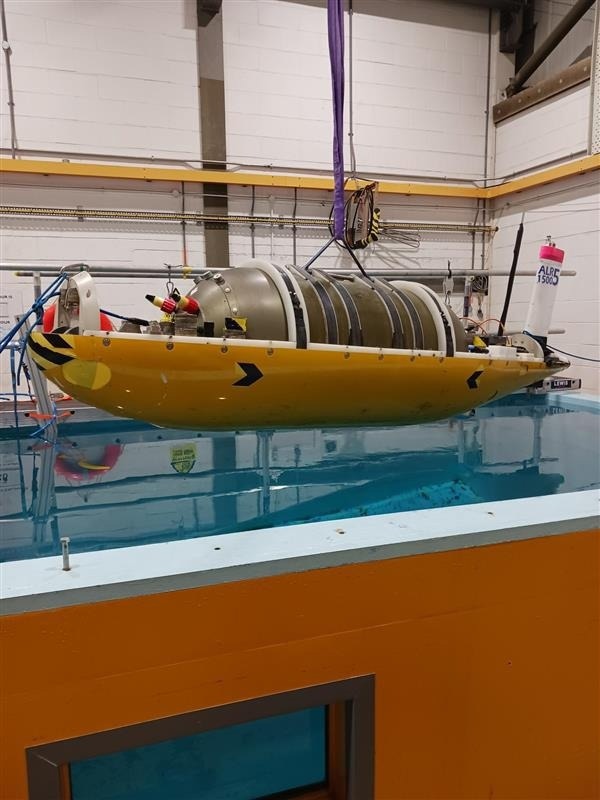
Aquark partnered with the Boaty McBoatface autonomous submarine to trial their cold-atom technology. Image Credit: Aquark Technologies
How has your “break it to build it better” philosophy shaped Aquark’s approach to designing cold-atom hardware for real-world use, and what key lessons came from failures along the way?
This philosophy has been central to our approach from the very beginning. Even during our academic research, we recognized a recurring issue in quantum technology: systems are typically optimized for laboratory conditions first and only later adapted for real-world deployment. That creates a significant barrier.
Instead, we deliberately avoided building fragile, high-performance lab systems. We designed our systems to operate in uncontrolled environments from day one. That meant testing them under stress, shaking components, and intentionally pushing them to failure early in development.
Failure, for us, is not a setback but the most valuable learning opportunity. Each failure informs the next design iteration. This mindset forced us to rethink system engineering and move away from conventional approaches, ultimately leading to more robust and deployable technology.
What specific engineering innovations make your cold-atom systems robust enough to operate outside controlled lab environments?
A key innovation is our use of a Super-Molasses Trap instead of the traditional magneto-optical trap. By removing the magnetic field component, we significantly simplify the system. This reduces hardware complexity, improves reliability, and makes the system more suitable for deployment.
We also focus heavily on simplicity as a design principle. Fewer components mean fewer failure points. Alongside this, we apply strong systems engineering practices and adopt a development approach similar to software iteration, where rapid prototyping and testing accelerate improvement.
All of these factors combine to produce systems that are inherently more robust and capable of functioning in challenging, real-world environments.
Simplicity, combined with a software-like, iterative approach to hardware development, allows us to build cold-atom systems that are robust enough to operate reliably outside the lab.
How would a cold-atom clock or quantum navigation unit practically secure infrastructure in a GNSS-denied or spoofed scenario?
At its core, a quantum inertial navigation system provides positioning without relying on GPS. That alone addresses the problem of GNSS denial or spoofing.
Atomic clocks play a critical role here. Timing is fundamental to everything from telecommunications to financial systems. Today, infrastructure already depends on distributed timing via fiber networks, but cold-atom clocks open up new possibilities.
If widely deployed, these clocks could act like ground-based satellites, enabling localized navigation systems. You could effectively create a “GPS-like bubble” where infrastructure defines position relative to itself, even when satellite signals are unavailable or compromised.
This not only enhances resilience but also introduces entirely new capabilities for secure and independent navigation.
What did your Royal Navy and Boaty McBoatface trials reveal about performance in real-world conditions, and how did that feedback influence your designs?
From the outset, we prioritized real-world trials, even when our systems were still in early development. In fact, our first deployments were powered by something as simple as a bike battery, which highlights how early we pushed into field testing.
The Royal Navy and Boaty McBoatface trials were particularly valuable because they exposed the systems to harsh and unpredictable environments. Despite these demanding conditions, the technology performed successfully, revealing the robustness of the Super-Molasses Trap as well as practical hardware challenges such as power and integration.
The feedback from these trials directly influenced our design iterations, helping us refine robustness, improve packaging, and better understand how the systems behave outside controlled conditions. Trialling remains a core part of our development cycle.

Aquark conducted several tests with the Royal Navy. Image Credit: Aquark Technologies
Where do you see the most immediate civilian impact for cold-atom technology across sectors like telecoms, finance, energy, and transport, and which risks are you targeting?
Timing is the most immediate area of impact. Many critical systems rely on precise synchronization, including telecom networks, financial transactions, and energy grids.
The main risk we are addressing is the reliance on GNSS for timing. If GPS signals are disrupted, spoofed, or denied, it can have cascading effects across multiple sectors. A UK government study currently estimates that a week-long GNSS outage would cost £7.6 billion.
By deploying cold-atom clocks within infrastructure, we can provide independent, highly accurate timing sources. This reduces dependency on external systems and significantly improves resilience across industries.
What are the main challenges of integrating cold-atom timing into existing telecom networks, and how could that reshape network resilience?
One of the biggest challenges is compatibility with existing infrastructure. Telecom networks are already complex and highly optimized, so integrating new timing systems requires careful consideration of standards, interfaces, and deployment costs.
However, once integrated, cold-atom timing could transform resilience. Instead of relying on centralized or satellite-based timing, networks could operate with distributed, highly accurate clocks embedded within the system itself.
This would reduce single points of failure and make networks far more robust against disruption.
What technological, commercial, and regulatory steps are needed for cold-atom systems to become standard critical infrastructure?
Technologically, continued miniaturization and cost reduction are essential. Systems need to be scalable and easy to deploy.
Commercially, there needs to be a clear value proposition that justifies adoption. This often comes from addressing real risks, such as GNSS vulnerabilities.
From a regulatory perspective, standards and certification frameworks will be important to ensure interoperability and trust in the technology. Collaboration between industry, government, and academia will play a key role in this transition.
In five to ten years, how might widespread adoption of cold-atom technology change the resilience of systems like power grids, data centres, and financial networks?
If widely adopted, cold-atom technology could fundamentally change how we think about infrastructure resilience. Systems would no longer depend on a single external source for timing or positioning.
Power grids could maintain synchronization even during disruptions. Data centres could operate with improved coordination and reliability. Financial networks could ensure transaction integrity without relying on vulnerable external signals.
Overall, we would see a shift toward decentralized, self-reliant infrastructure that is far more resilient to both accidental failures and intentional interference.
Download the PDF of this interview here
About the Speaker
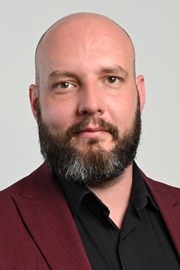
Andrei Dragomir is the co-founder and CEO of Aquark Technologies, where he leads Aquark’s mission to transform quantum technologies from complex laboratory systems into practical, scalable solutions for the real world.
With a background in experimental quantum physics and a PhD from the University of Southampton, his research and entrepreneurial vision laid the foundation for Aquark's technical advantages. Andrei guides the company's strategy, partnerships, and product development, ensuring that innovations in quantum sensing, navigation, and timing translate into tangible impact across industries, while leading Aquark towards a future where quantum technologies are accessible and embedded into the fabric of everyday life.
Disclaimer: The views expressed here are those of the interviewee and do not necessarily represent the views of AZoM.com Limited (T/A) AZoNetwork, the owner and operator of this website. This disclaimer forms part of the Terms and Conditions of use of this website.