For decades, data centers have operated quietly in secure, often unremarkable buildings, spanning acres of land, demanding massive amounts of energy, and typically consuming millions of liters of water to keep servers cool. But over the past five years, the surge in Artificial Intelligence (AI) and cloud computing has driven rapid global expansion of data center infrastructure. In response to growing concerns over water use and energy efficiency, leading tech companies and researchers are now looking upward, actively exploring the potential of placing data centers in space. The concept of orbital data infrastructure is becoming a serious area of research and development.
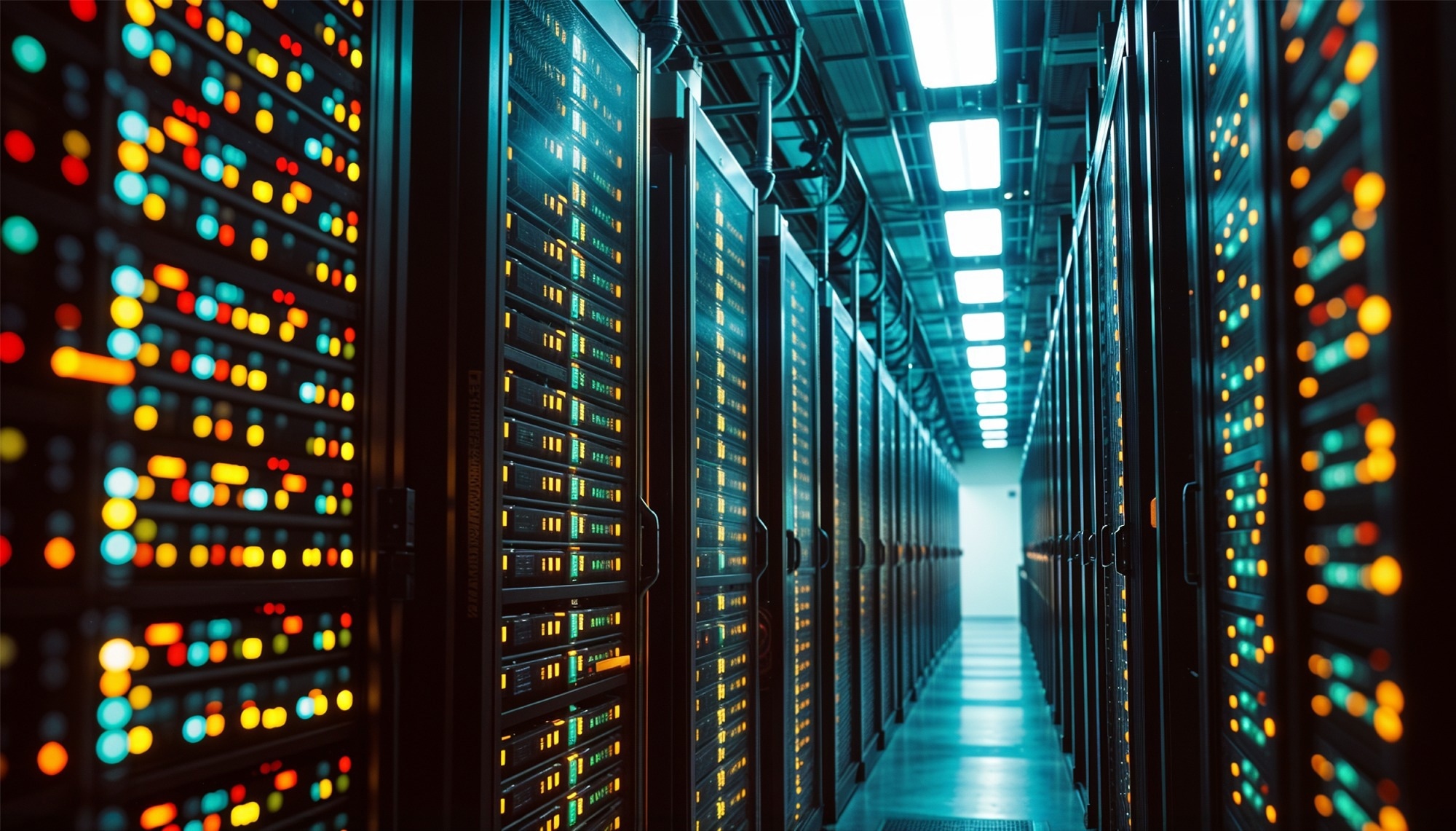
Image Credit: KM Stock/Shutterstock.com
Major Ecological Challenges for Terrestrial Data Centers
AI, cloud computing, and digital tools hosted in the cloud have become essential for professionals and organizations worldwide. This widespread adoption has dramatically increased the demand for online computational resources. However, traditional terrestrial data centers come with steep operational costs, particularly when it comes to power and cooling. Maintaining optimal temperatures for high-performance servers often requires specialized cooling fluids and significant amounts of water, leading to massive energy bills and ongoing sustainability concerns.
As reliance on AI and IoT-driven cloud tools continues to grow, so too does the power demand of modern data centers, bringing with it a corresponding rise in carbon dioxide emissions. In an effort to curb environmental impact, some operators have turned to "free cooling" methods that use outside air or naturally cool environments to regulate temperature. While this approach offers some benefits, its effectiveness is limited. For most large-scale operations, water and specialized cooling fluids remain essential to maintain the precise thermal conditions needed for optimal performance.1
Heavy Investments in Sustainable Cloud Operations
Governments around the world are aligning their policies with the pursuit of Sustainable Development Goals (SDGs), with a strong emphasis on ecological sustainability. The United States government, the European Commission, and countries such as China and Japan have all shown full support for digitalization initiatives led by major tech companies, particularly those that prioritize energy efficiency and environmentally responsible innovation. These efforts reflect a broader commitment to leveraging digital transformation as a pathway to sustainable growth.
Hyperscalers like Amazon Web Services (AWS), Microsoft, and Google are investing in promoting and purchasing clean and green energy, with AWS being committed to utilize renewable energy for all operations in the coming years. Using energy efficient operational frameworks, and machine-learning (ML) based heating and cooling solutions, Google has saved around 20 billion kwh energy by 2023.2 In 2024, Microsoft has also announced that around 70% of its data centers are utilizing renewable energy for operations, utilizing AI-driven tools for controlling emissions.3
These tech giants are also showing growing interest in space-based data centers, viewing them as a promising long-term solution to the environmental issues they pose. Google is investing in and researching a moonshot project, titled “Project Suncatcher,” which will utilize a highly organized framework of solar-powered satellites utilizing Google TPUs for developing an orbital infrastructure for powering and scaling cloud operations.4 NVIDIA is pioneering “Project Inception,” which involves sending an AI-equipped satellite from Starcloud serving as the initial step to develop state-of-the-art data centers in outer space.5 These strategic investments signal a clear belief that space-based data centers could play a key role in the future of sustainable, energy-efficient digital infrastructure.
Download the PDF of the article
Concept and Feasibility of Space Data Centers
Space-based data centers are expected to play a pivotal role in enabling future technological advancements. A critical goal researchers are working toward is achieving what's known as “Earth Independence.” This concept envisions orbital data centers capable of supporting AI and cloud operations entirely from space, without relying on terrestrial power, water, or cooling resources. If realized, it could dramatically reduce the environmental footprint of digital infrastructure and redefine how global computing systems operate.6
Space-based data centers could also support carbon neutrality. By harnessing abundant solar energy through highly efficient solar cells, these centers offer a far more sustainable way to power digital operations. Researchers and private companies are focusing on two primary models: orbital edge data centers and orbital space data centers.
Orbital edge data centers are designed for localized data processing closer to where data is generated, helping reduce latency and bandwidth load. In contrast, orbital space data centers are intended to handle large-scale, complex, and resource-intensive operations that support AI, cloud computing, and global digital services on Earth. Together, these frameworks could form the backbone of a cleaner, more resilient digital infrastructure.
The Orbital Edge Space Data Center Framework
Orbital edge data centers are equipped with advanced data sensors and highly optimized processors, such as AI accelerators tailored for tasks like vision processing. These centers draw power from large solar panels and maintain performance using active radiative cooling systems, designed to manage heat efficiently in the vacuum of space.
Their processing framework significantly enhances the computational capabilities of satellites, enabling powerful edge computing directly in orbit. This setup not only reduces the need for constant data transmission back to Earth but also allows for real-time analysis and decision-making in space. Companies like AMD have contributed to this frontier by developing specialized “radiation-hardened” accelerators and CPUs, built specifically to withstand the harsh conditions of space while delivering high-performance computing.
The Orbital Cloud Space Data Center Framework
Orbital cloud data centers share many similarities with edge data centers but come with a few key functional distinctions. These systems can be thought of as a constellation of specialized computational satellites operating in Low Earth Orbit (LEO), typically a few hundred kilometers above the Earth's surface.
While orbital edge data centers focus on localized, near-instant processing, orbital cloud data centers are designed for broader, large-scale cloud services, acting as an extension of traditional cloud infrastructure, but from space. This setup enables high-speed, low-latency processing and data delivery across regions, while reducing the reliance on energy-intensive, Earth-based facilities.
Each of these satellites is equipped with broadband connectivity and specialized high-speed servers. Specially fabricated, highly compact components like computational processing chips (CPUs), RAM, ultra-fast storage components like SSDs, GPUs, and an operating system ensure that the servers work in parallel without any obstruction. The power to operate these components is delivered via an array of large solar cells, with each component and the body fabricated with radiation shielding coatings and specialized materials.
While low-power processors and chips in space can often rely on passive cooling, the demands of highly complex orbital data centers require a more advanced solution. These systems are equipped with active radiative cooling mechanisms specifically designed to dissipate large amounts of heat into the cold vacuum of space.
As with other components onboard, the cooling infrastructure is engineered to be both compact and energy-efficient. This ensures not only thermal stability but also supports multi-cloud capabilities while keeping operational costs low, a critical balance for maintaining performance and sustainability in space-based computing environments.7
Commercial Advantage
High-intensity solar power is estimated to drastically slash the energy costs for AI model training. Carbon emissions from space-based data centers are estimated to be 10 to 20 times lower than those of traditional terrestrial facilities, even when accounting for the greenhouse gases released during rocket launches.
In addition to lower costs and environmental footprint, the space-based data centers allow low-latency data transmission and internet connectivity to even remote and harsh areas like the polar regions. Space-based data stations offer a vital advantage by providing reliable data access to even the most remote regions on Earth. Their ability to maintain seamless service, especially during natural disasters, makes them a powerful tool for emergency response and continuity.
With significantly lower latency, these systems enable faster, real-time processing, which can dramatically improve response times in crisis scenarios. Beyond disaster relief, this capability also opens new frontiers in national defense and environmental monitoring, offering faster insights, broader coverage, and enhanced situational awareness in critical moments.
The autonomy of space-based systems, operating independently of ground-based resources, paves the way for rapid and flexible scalability. Unlike terrestrial data centers, which are constrained by land availability, zoning regulations, and infrastructure costs, orbital facilities eliminate these limitations entirely.
By removing the burden of territorial land use, space-based data centers offer virtually unlimited physical room for expansion. This not only supports future growth in AI and cloud computing demand but also allows for strategic deployment tailored to global coverage and efficiency.8
Technical Challenges
Despite the benefits associated with space-based data centers, there are certain critical technical and business challenges associated with them. First of all, launching a satellite into orbit for the transport of crucial components is highly expensive, with estimates ranging from 8.2 million USD for a single launch. In addition, the harsh conditions of space, such as cosmic radiation and space debris, can lead to more frequent failures and data corruption, resulting in increased maintenance needs.9
Moreover, extensive research is needed to develop a framework that can overcome atmospheric interference and maintain low latency. One of the key challenges lies in enabling reliable inter-satellite communication while ensuring adherence to precise orbital formation control.10
Radiation damage and orbital debris risk are a major threat limiting the life-cycle of space-based data centers. Even the specially designed, highly complex state-of-the-art International Space Station (ISS) has a limited lifespan and is expected to be decommissioned around 2035 due to the vacuum, radiation, and temperature-based abnormalities. What’s more, in case of any mishaps or hardware damage, specialized teams and missions would be required in space, making the repairs highly complex and quite expensive.11
Could a trip to the Moon help us test future tech required for a project like this? Find out here
Further Reading
- Periola, A., Alonge, A. and Ogudo, K. (2020). Space Habitat Data Centers - For Future Computing. Symmetry, 12(9), p.1487. https://doi.org/10.3390/sym12091487
- Rikap, C. and Weko, S. (2025). A green transition orchestrated from Big Tech clouds? Globalizations, pp.1–20. https://doi.org/10.1080/14747731.2025.2548716
- Agarwal, S. (2025). Cloud Sustainability: Green Initiatives and Energy Efficiency. Techahead. [Online]. https://www.techaheadcorp.com/blog/cloud-sustainability-green-initiatives-and-energy-efficiency/
- Research.google. (2025). Exploring a space-based, scalable AI infrastructure system design. [online] https://research.google/blog/exploring-a-space-based-scalable-ai-infrastructure-system-design/
- Lee, A. (2025). How Starcloud Is Bringing Data Centers to Outer Space. [online] NVIDIA Blog. https://blogs.nvidia.com/blog/starcloud/
- Axiomspace.com. (2025). Axiom Space Partners with Kepler Space and Skyloom to Operationalize the World’s 1st Orbital Data Center. [online]. https://www.axiomspace.com/release/orbital-data-center [Accessed 17 Jan. 2026]
- Aili, A., Choi, J., Ong, Y.S. and Wen, Y. (2025). The development of carbon-neutral data centres in space. Nature Electronics. https://doi.org/10.1038/s41928-025-01476-1.
- Team, Flypix AI. (2026). Data Centers in Space: Why AI Infrastructure Is Leaving Earth. [online] Flypix. https://flypix.ai/data-centers-in-space/ [Accessed 17 Jan. 2026]
- Davison, A. (2024). Are data centers in space the future of cloud storage? [online] Ibm.com. https://www.ibm.com/think/news/data-centers-space
- Blaise, A., Beals, T., Biggs, M., Bloom, J.V., Fischbacher, T., Gromov, K., Köster, U., Pravahan, R. and Manyika, J. (2025). Towards a future space-based, highly scalable AI infrastructure system design. arXiv (Cornell University). https://doi.org/10.48550/arxiv.2511.19468.
- Anand Karasi (2025). Why a Space-Based Data Center Isn’t Feasible Anytime Soon. [online] Medium. https://medium.com/@anandglider/why-a-space-based-data-center-isnt-feasible-anytime-soon-911f67d27676 [Accessed 17 Jan. 2026].
- Axiomspace.com. (2025). Orbital Data Centers. [online]. https://www.axiomspace.com/orbital-data-center [Accessed 17 Jan. 2026].
- Lonestar. (2024). Lonestar. [online]. https://www.lonestarlunar.com/
Disclaimer: The views expressed here are those of the author expressed in their private capacity and do not necessarily represent the views of AZoM.com Limited T/A AZoNetwork the owner and operator of this website. This disclaimer forms part of the Terms and conditions of use of this website.