First Light Fusion (FLF) has successfully completed the first experimental campaign of its VIPER velocity amplifier at Texas A&M Engineering Experiment Station (TEES) Hypervelocity Impact Laboratory (HVIL), demonstrating First Light Fusion’s ability to create some of the most extreme impact conditions encountered in space and high-speed flight.
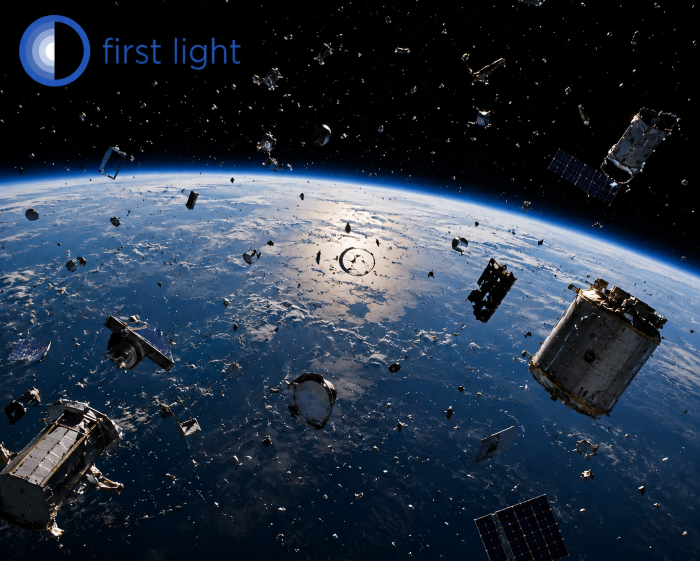 Image Credit: First Light Fusion Ltd.
During the testing program at HVIL’s two-stage light-gas gun and aeroballistic range, three successful shots were conducted using VIPER velocity amplifiers, achieving projectile velocities exceeding 12 km/s - more than 30 times faster than a commercial airplane and comparable to the speeds of orbital debris travelling around Earth.
Spacecraft and satellites are constantly exposed to impacts from micrometeoroids and orbital debris travelling at extreme velocities. Even particles smaller than a millimeter in diameter can cause significant or catastrophic damage when travelling at orbital speeds. Until now, generating representative impact conditions for these threats in a laboratory environment has been beyond the capability of most hypervelocity test facilities, limiting access to critical spacecraft resilience data.
VIPER was developed to help solve this problem. By increasing the impact speed achievable in existing real-world test facilities, the VIPER technology enables researchers and engineers to study how materials used for spacecraft components and protective shielding behave under realistic impact conditions which were previously difficult or impossible to recreate on Earth.
Key researchers and collaborators from across the US scientific and aerospace community showed keen interest in the experiments, highlighting growing interest in accessible, high-velocity impact testing capabilities outside traditional large-scale government facilities.
Dr. Tim Ringrose, Lead Scientist at FLF, said: “This campaign was a major milestone for the VIPER program. Demonstrating the system successfully in a real-world operational laboratory environment at TEES HVIL validates both the underlying technology and its potential to dramatically increase the performance of existing two stage light gas gun facilities. The results open exciting opportunities for future hypervelocity testing applications here in the UK.”
Texas A&M University (TAMU) professor Thomas E. Lacy Jr., Director of TEES HVIL, added: “The VIPER velocity amplifiers have dramatically expanded the achievable projectile velocities using 2SLGGs. This has important implications for research involving micrometeoroid and orbital debris (MMOD) impacts to space vehicles/structures, re-entry vehicles, hypersonics, and other applications where ultra-high-rate small particle impacts are a serious concern.”
The successful TEES HVIL campaign represents an important step in FLF’s strategy to commercialize advanced hypervelocity testing technologies for applications across space, defense, and advanced materials research.
Following the success of VIPER, First Light Fusion is now progressing development of future VIPER variants, including systems designed for improved projectile control and solid spherical projectile launch capability. These next-generation systems are expected to further expand the accessible hypervelocity testing regime and support a broader range of experimental applications.