The potential origin of noise mechanisms that impact spin qubit performance has been uncovered by a joint research team from Tokyo University of Science (TUS) and the National Institute of Advanced Industrial Science and Technology (AIST), Japan. The findings of the study, led by Professor Takayuki Kawahara from the Department of Electrical Engineering at TUS, were published in IEEE Access.
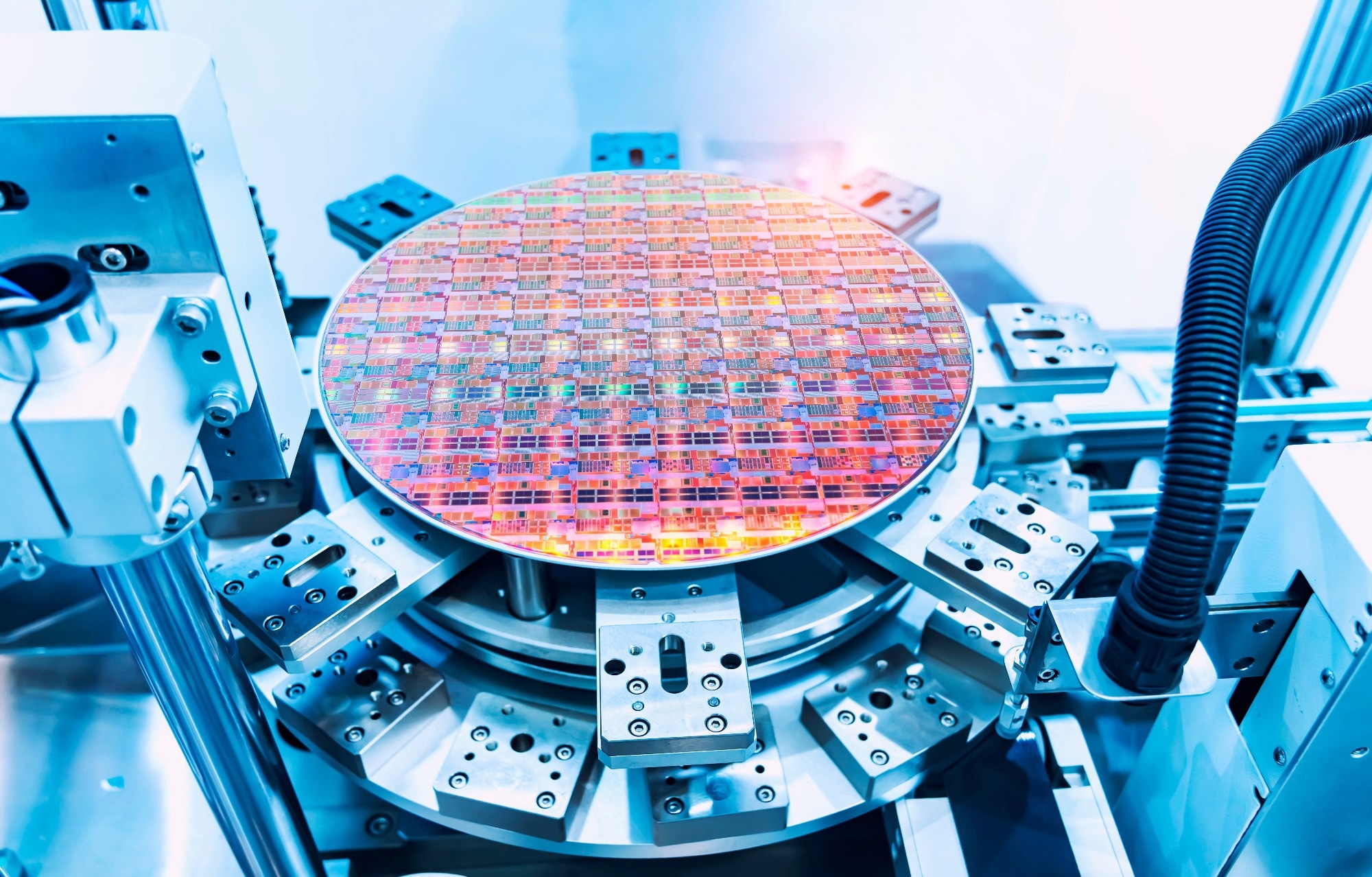 Study: On the Improvement of Gate Fidelity in Spin Qubits With Two-Level Fluctuators at Higher Temperatures. Image credit: asharkyu/Shutterstock.com
Spin qubits, which encode quantum information in an electron's spin state, are one of the most promising quantum computing platforms. They have extended coherence periods and are compatible with modern semiconductor manufacturing technology.
The most common spin qubit application employs confined electrons in quantum dots, nanoscale semiconductor structures that function like controllable artificial atoms. Recent developments have enabled high-fidelity functioning of single- and two-qubit gates, which exceeds the necessary threshold for some surface-code quantum error correction methods.
However, the variability problems of spin qubit gates need to be resolved to establish realistic fault-tolerant quantum computing. Variations in the qubit resonance frequency caused by microscopic noise sources present a significant obstacle in this situation.
The “Larmor frequency,” or constant qubit resonance frequency (fq), is necessary for efficient qubit functioning. According to recent research, heat produced by microwave signals used to operate qubits can change the fq.
Specifically, the fq increases sharply at low temperatures before gradually decreasing at higher temperatures. The non-monotonic temperature dependency breaks resonance, reducing gate fidelity.
Surprisingly, earlier research has revealed that using a higher temperature of 200 millikelvin (mK) instead of the normal temperature of 20 mK can reduce the influence of fq shift on gate fidelity. Despite the significance of this phenomenon, its microscopic origin has remained unknown.
In the present study, the researchers clarified the noise mechanisms that influence the performance of silicon spin qubits. They showed that higher temperatures can increase gate fidelity by combining theoretical modeling with statistical simulations of charge noise caused by two-level fluctuators (TLFs).
Several candidates have been proposed to explain the origin of the qubit or Larmor frequency shift. Among them, the charge-noise model seems to be most promising as it can reproduce key features of fq shift. In this study, we focused on the charge noise model to elucidate the origin of the temperature dependence of fq shift and to analyze qubit fabrication approaches that can alleviate its effect on gate fidelity.
Takayuki Kawahar, Professor, Department of Electrical Engineering, Tokyo University of Science
The researchers created a spin qubit model in which electrons were confined to a dot generated in a silicon/silicon-germanium (Si/SiGe) double heterostructure. Electron spins were controlled using microwaves in the presence of an external magnetic field gradient. This framework was used to statistically model the impact of multiple TLFs near the semiconductor/oxide contact.
They carefully adjusted a broad range of TLF parameter settings, including geographic activation-energy distributions, minimum transition durations, and temperature dependency of switching times. The researchers analyzed 108 parameter sets, each with 5000 randomly generated TLF configurations.
They then estimated qubit frequency shifts for each parameter, as well as temperature dependence and X quantum gate fidelity. Their research revealed that the experimental results were best replicated when TLF activation energies followed an exponential distribution, minimum switching periods were short, and switching rates were strongly temperature-dependent.
Under these conditions, the model precisely reproduced the experimentally observed temperature of the qubit frequency shift. Gate fidelity simulations revealed that fidelity improves at 200 mK when transition periods are substantially shorter than gate times, and parameters undergo a strong temperature shift.
As a result of these findings, the researchers importantly concluded that the relevant TLFs and associated frequency shifts are most likely the result of electronic transitions between the conduction band and trap states (which involve generation/recombination or band-edge trap processes), rather than slower atomic-scale structural motion. This research sheds fresh light on the microscopic causes of charge noise in silicon spin qubits.
Our findings highlight the importance of controlling semiconductor/oxide interface trap states and adopting fabrication procedures that stabilize qubit frequencies in improving gate fidelities for future large-scale silicon quantum processors. This could contribute significantly to the development of practical large-scale quantum computers with reduced noise.
Takayuki Kawahar, Professor, Department of Electrical Engineering, Tokyo University of Science
Overall, this study gives crucial insights into how to improve spin qubit gate performance, bringing humanity closer to large-scale fault-tolerant quantum computing.
Journal Reference:
Sato, Y., et al. (2026) On the Improvement of Gate Fidelity in Spin Qubits With Two-Level Fluctuators at Higher Temperatures. IEEE Access. DOI: 10.1109/ACCESS.2026.3690197. https://ieeexplore.ieee.org/document/11505846.