A team of researchers at Australia’s national science agency, CSIRO, the University of Queensland, and the Okinawa Institute of Science and Technology (OIST) has introduced a novel method for powering quantum computers through the use of quantum batteries in a significant leap that could enhance the speed, reliability, and energy efficiency of future computers. The study was published in Physical Review X (PRX).
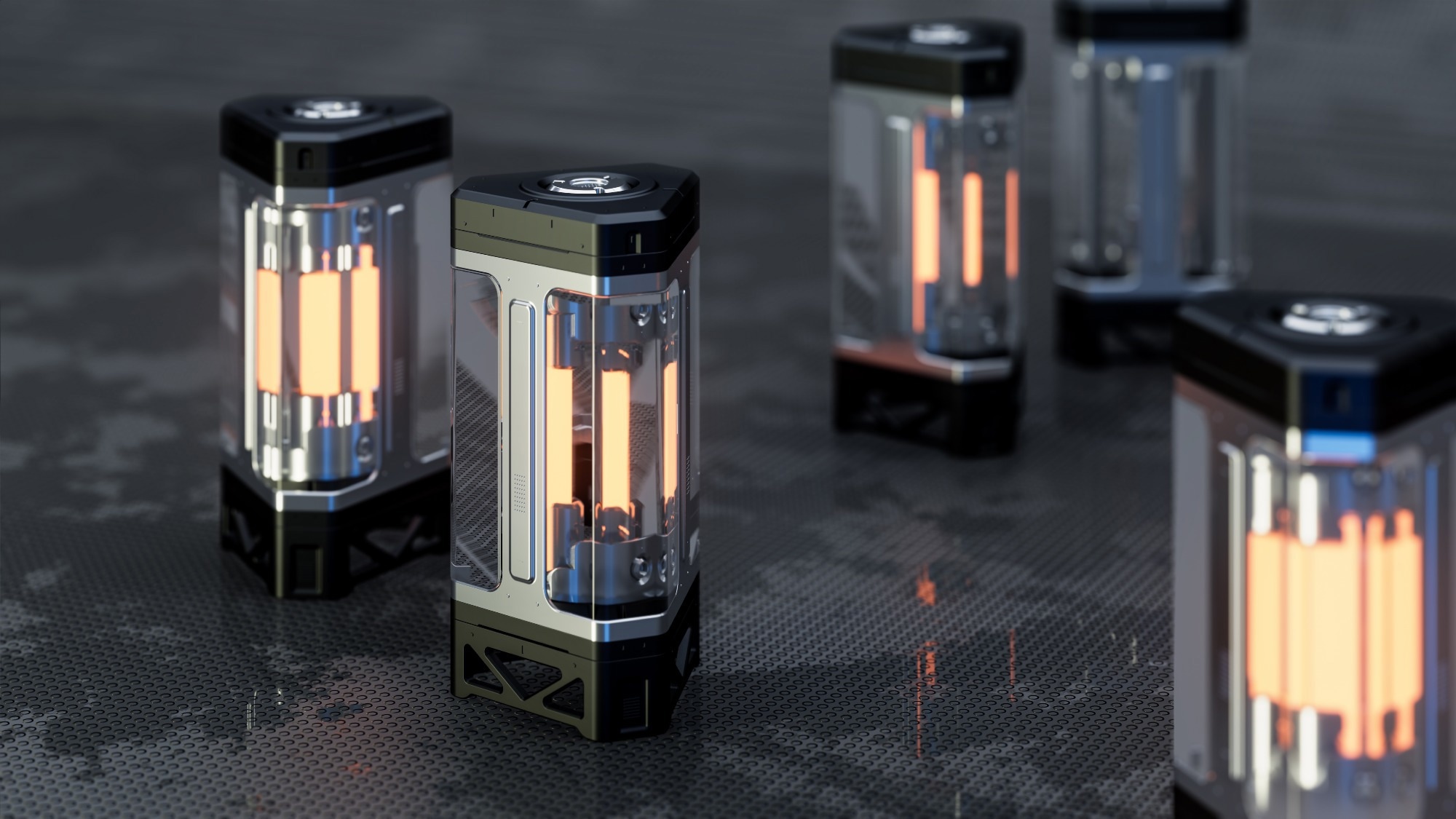
Image Credit: pinkeyes/Shutterstock.com
Quantum computers apply the principles of quantum physics to tackle complex problems, with the potential to significantly impact fields like computing, medicine, energy, finance, and communications in the years ahead.
However, maintaining their fragile quantum states generally requires large, energy-consuming cryogenic cooling systems, along with a suite of room-temperature electronics.
These infrastructural and energy demands remain the biggest hurdles to scaling quantum computers. They restrict the systems’ size and processing power, narrow their range of applications, and slow their path to market.
A team of researchers from Australia’s national science agency, CSIRO, in collaboration with the University of Queensland and the Okinawa Institute of Science and Technology (OIST), has theoretically shown how miniature quantum batteries could power a quantum computer, potentially quadrupling its quantum bits, or qubits.
Quantum batteries could be a game-changer. They let the computer power itself from the inside, cutting heat, cutting wires, and letting us fit more qubits into the same space – it’s like giving quantum computers their own internal engine.
Bill Munro, Study Co-Author and Head, Quantum Engineering and Design Unit, OIST
How Can Quantum Batteries Power the Future of Quantum Computing?
Dr. James Quach, co-author of the study and lead researcher on quantum batteries at CSIRO, explained that these computers use significantly less energy thanks to internal quantum batteries, which can recycle energy within the system.
Quantum batteries are small and mighty. Our findings bring us one step closer to solving the energy, cooling, and infrastructure challenges restricting quantum computers. It’s like giving the computer its own internal fuel tank. Instead of constantly refilling it from the electricity grid, the battery recharges while the computer operates. This research forms a key step in our exploration of quantum energy – an emerging field that could fundamentally reshape the way we create efficient, sustainable energy systems.
Dr. James Quach, Study Co-Author and Lead Researcher, CSIRO
Quantum batteries are devices that utilize light to store energy, enabling them to recharge merely by being exposed to it. When incorporated into a quantum computer, they can be perpetually recharged by the components of the machine.
In this configuration, the battery is connected to the quantum processing units of the computer via a phenomenon referred to as entanglement, establishing a mutual quantum link.
“We’ve calculated that quantum-battery-operated systems will generate significantly less heat, require fewer wiring components, and fit more qubits into the same physical space – all important steps toward building practical, scalable quantum computers,” explained Dr. Quach.
Modeling suggests that this architecture could boost computational speed through a concept known as quantum superextensivity, a phenomenon where increasing the number of qubits results in faster overall performance.
The study discusses the theoretical modeling of how quantum batteries could energize current quantum computers; the next phase for the team is to create a practical demonstration of this method.
Although quantum batteries are still a developing technology and require additional advancement, this strategy opens up thrilling prospects for the future of quantum computing.
Sources:
Journal Reference:
Kurman, Y., et al. (2026) Powering Quantum Computation with Quantum Batteries. Physical Review X. DOI: 10.1103/l39v-jwwz. https://journals.aps.org/prx/abstract/10.1103/l39v-jwwz
Okinawa Institute of Science and Technology (OIST)