Researchers from Rutgers, IBM, and partner organizations have demonstrated that a quantum computer can monitor its internal operations and adjust during execution, systematically recalibrating specific components to manage unpredictable behavior. This development represents a significant step toward creating more expansive and dependable quantum computing systems.
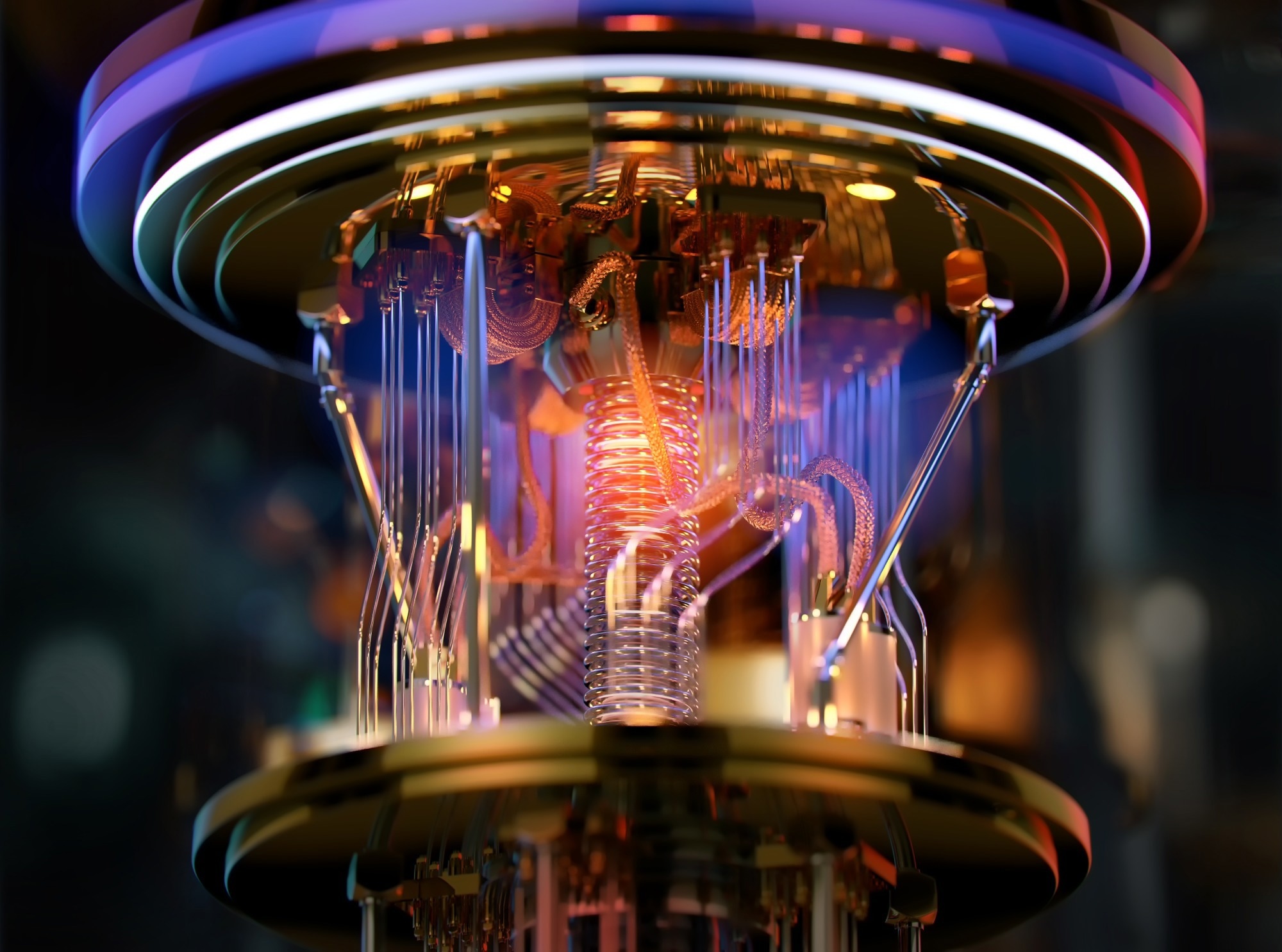 Study: Order from chaos with adaptive circuits on quantum hardware. Image Credit: Corona Borealis Studio/Shutterstock.com
Contemporary quantum computers function according to the distinctive principles that govern subatomic particles and other infinitesimally small entities.
Such systems have the potential to eventually address computational challenges that surpass the capabilities of traditional computers. These include the development of superior battery technologies and environmentally sustainable industrial catalysts, the simulation of molecular and material structures that exceed the processing capacity of existing computers, and the execution of specialized artificial intelligence applications.
Scientists from Rutgers, International Business Machines Corp., and associated research institutions demonstrated that a quantum computer can perform continuous self-examination and component recalibration throughout its operational cycle.
This research constitutes one of the most comprehensive experimental validations to date of instantaneous quantum feedback control, a feature regarded as indispensable for future quantum computers capable of achieving fault tolerance.
Scaling quantum computers will necessitate their ability to detect and rectify errors during operation, a function referred to as error correction, enabling the development of a fault-tolerant quantum computer. A fault-tolerant quantum computer maintains accurate computations despite the frequent minor errors occurring in its individual quantum bits. Currently, no one has succeeded in creating such a device.
To build a fault-tolerant quantum computer, we have to make these checks and corrections not just once or twice, but a huge number of times during a calculation.
Jedediah Pixley, Professor, Department of Physics and Astronomy, School of Arts and Sciences, Rutgers University, and Director of the Center for Materials Theory
“This experiment is a landmark on that road,” said Pixley, who also is a member of the Flatiron Institute, the scientific research division of the Simons Foundation in New York, and one of the senior authors of the study. “It says, ‘OK, we’ve taken another important step to get there.”
The study substantiated a theoretical prediction regarding quantum mechanics behavior. The apparatus underwent a sudden transition from chaotic behavior to an orderly, controllable state, thereby demonstrating the emergence of organization from disorder upon increasing the frequency at which the computational apparatus monitored and recalibrated its core data-retention components, referred to as qubits.
Traditional computing systems encode information using bits, where each bit has a binary state of either 0 or 1. Quantum computing systems, by contrast, employ qubits, which can exist in superposition states. This characteristic permits them to maintain multiple potential values between 0 and 1 until measurement occurs, at which point each qubit resolves to a singular outcome of either 0 or 1.
While these unique properties give quantum computers immense processing potential, they also render the stored information highly delicate. External factors such as heat, electromagnetic interference, faulty control signals, and minor hardware defects can easily corrupt a qubit's state. As these errors compound over time, the calculation eventually loses its reliability.
The challenge was not simply to measure a qubit, but to do it repeatedly while the rest of the processor continued to operate. This experiment shows that present-day hardware can coordinate quantum operations, measurements and resets thousands of times across a large system.
Maika Takita, Study Senior Author and Principal Research Scientist for Quantum Error Correction and Dynamic Circuits Experiments, IBM
In contrast to typical computer data, quantum information cannot be easily duplicated. Furthermore, measuring quantum information can alter or destroy the state it represents. A machine that is fault-tolerant must consistently identify and rectify errors while preserving that information.
Using a 156-qubit IBM Quantum Heron processor, which is among the world's most advanced, researchers linked a chain of up to 100 qubits to test a novel control method.
They programmed the processor to alternate between two opposing operations: a "scrambler" task that shuffled information between neighboring qubits like a deck of cards to induce chaos, and a "reset" task that inspected and corrected individual qubits to steer them back toward an orderly state.
Executing nearly 10,000 combined operations and resets, the team achieved the largest successful demonstration of this technique to date.
By tuning the frequency of each task, the researchers observed a sharp tipping point. If scrambling dominated, chaos prevailed; if resets were more frequent, the system stabilized into the desired state.
At an even balance, the slightest shift triggered a sudden, system-wide transformation, what physicists call a phase transition, akin to liquid water snapping into solid ice. This instantly converted chaotic qubit behavior into a controlled, orderly state.
Small changes can lead to large and nearly impossible-to-predict consequences, like the classic idea that a butterfly flapping its wings in Africa could eventually contribute to a hurricane hitting Louisiana. But this out-of-control behavior can be brought under control by randomly intervening, and there is a sharply defined rate at which that happens. It wasn’t obvious that this transition between chaos and control would survive in quantum physics, but our results show that it does.
Justin Wilson, Study Co-Author and Associate Professor, Physics, Louisiana State University
The project originally sprang from a playful bet at a 2021 party. Pixley's longtime collaborator, Sriram Ganeshan, wagered that a baffling quantum phenomenon had a direct counterpart in classical physics. That bet sparked a new theory on controlling quantum chaos, which eventually evolved into a real-world experiment following a chance conversation with IBM physicist Barbara Jones.
Using the IBM processor, the team tested their theory across systems of up to 100 qubits, vastly exceeding the ~24-qubit limit of traditional computer simulations, and found that the experimental data aligned almost perfectly with their predictions.
“What was striking was that the transition became more clearly defined as we studied larger systems,” said Haining Pan, a Rutgers postdoctoral researcher at the time of the study and a co-first author. “The agreement between the experiment and the theory showed that this was not an accidental feature of a small circuit. It was collective behavior emerging across the quantum system.”
Along with Rutgers and IBM, the study brought together researchers from several institutions, including the City College of New York, the CUNY Graduate Center, Iowa State University, Ames National Laboratory, Pennsylvania State University, and Louisiana State University.
Journal Reference
Pokharel, B., et al. (2026) Order from chaos with adaptive circuits on quantum hardware. Nature Physics. DOI:10.1038/s41567-026-03470-6. https://doi.org/10.1038/s41567-026-03470-6