Satellite telescopes must operate in one of the harshest environments in optical engineering. These instruments are exposed to radiation, extreme thermal cycles, atomic oxygen, and broad spectral ranges.
These telescopes require coatings that ensure long-term performance, stability, and survivability, whether they are used to image Earth in the visible and near-infrared ranges or to observe celestial bodies in the UV or thermal infrared ranges.
Anti-Reflective (AR) Coatings for Multi-Band Performance
High-performance AR coatings employed in satellite telescopes can be tailored to specific mission wavelengths to maximize optical throughput and minimize ghosting. These broadband AR coatings are essential, whether the telescope is used for star tracking, atmospheric analysis, or Earth observation.
Deep UV to NIR Telescopes
Dielectric multilayers using MgF2, LaF3, and Al2O3 and other suitable materials can be specifically engineered to offer high transmittance and low absorption in vacuum conditions.
Multispectral Imaging Systems
It is possible to apply custom AR coatings to complex optics, for example, corrector plates in Ritchey–Chrétien configurations or lenses in wide-field imagers.
Coatings produced via atomic layer deposition (ALD) or ion-beam sputtering (IBS) offer dense film structure, superior environmental stability, and improved adhesion on lightweight substrates such as silicon carbide (SiC), Zerodur, or fused silica.
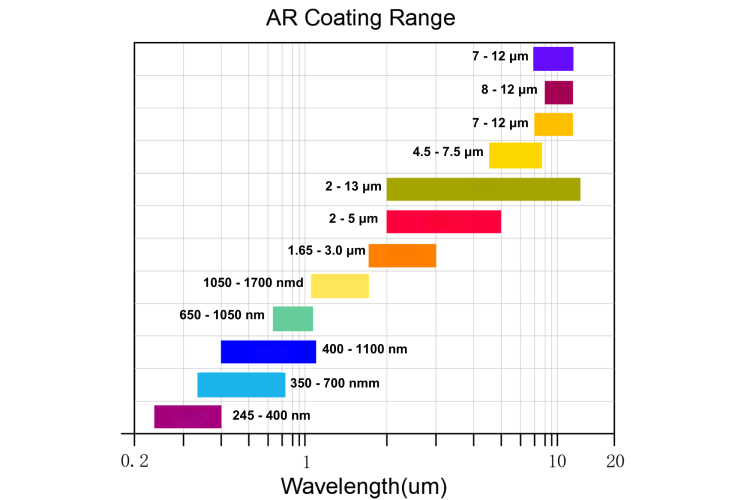
Image Credit: Avantier Inc.
Gold and Silver Coatings for IR Optics
Metallic coatings are indispensable for satellite telescopes operating in MWIR and LWIR, especially when working in thermal imaging or space surveillance settings.
Gold (Au)
Gold offers exceptional vacuum stability and high reflectivity, ranging from 0.7 µm to 20 µm. These characteristics make gold a common material for mirrors in passive infrared telescopes or thermal detectors.
Silver (Ag)
Silver offers high visible and NIR reflectivity, but this must be protected with dielectric overcoats to prevent degradation.
Application in Telescopes
Broadband silver tends to be used in spectrally diverse systems, while primary or secondary mirrors in Cassegrain or off-axis designs will typically be coated with protected gold to enable thermal IR.
Resistance to Atomic Oxygen (AO) in Low Earth Orbit (LEO)
Satellite telescope optics operating in LEO are required to withstand erosion caused by AO. This aggressive species can degrade exposed coatings and polymers.
Protective Layers
ALD-deposited Al2O3 or DLC (diamond-like carbon) can function as an effective AO barrier while continuing to ensure optimal optical performance.
Substrate Compatibility
It is important that coatings are mechanically compatible with SiC mirrors, optical polymers, and other key telescope materials under AO and thermal stress.
Testing Protocols
To verify their suitability for multi-year missions, space-qualified coatings will be subjected to AO plasma simulation, thermal cycling, and UV exposure.
System-Level Design for Satellite Telescopes
Multiple optical paths or fold mirrors are often integrated into advanced satellite telescopes. Each of these components requires specific coatings to meet both thermal and spectral requirements.
Dual-Band Systems
Hybrid coating stacks are required for telescopes that combine visible and IR paths, for example, an IR-reflective gold surface with a visible-pass AR overlay.
Thermal Management
Coatings with controlled absorptance and emittance can reduce image distortion and sensor noise by helping to manage stray light and thermal equilibrium.
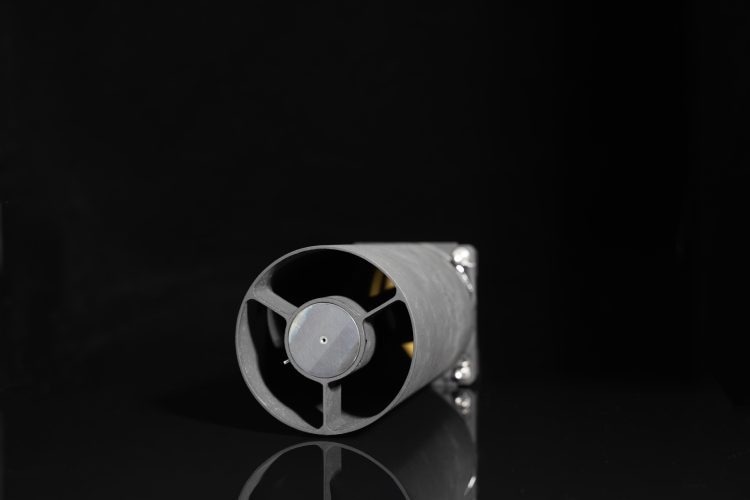
Silicon Carbide Telescope. Image Credit: Avantier Inc.
Space-Ready Optics
Avantier understands the complex challenges of designing optical systems for space applications. The company’s team can provide high-performance solutions for flight-ready optical coatings, precision optical design support, and fully customized lens and mirror assemblies across the UV to LWIR spectrum.
Avantier’s in-house capabilities enable flexibility, rapid turnaround, and innovation at each individual stage. Its engineers and researchers closely collaborate to meet mission-specific requirements, whether working with satellite telescopes, star trackers, or multi-spectral payloads.
Acknowledgments
Produced from materials originally authored by Avantier Inc.

This information has been sourced, reviewed, and adapted from materials provided by Avantier Inc.
For more information on this source, please visit Avantier Inc.