Implementing two-qubit gates on a new quantum processor, particularly one with tunable couplers and tunable qubits, can be a highly time-intensive undertaking.
The two-qubit interactions can only be calibrated after all the qubits have been located, the single-qubit operations have been calibrated, the couplers have been tuned, and the single-qubit operations have been recalibrated. All these steps must be performed before the commencement of real experiments to explore crucial science questions or run a desired algorithm.
Automation is a critical element to make this process more efficient, as Zurich Instruments has demonstrated with its LabOne Q automation workflow across a range of qubit platforms (in collaboration with Fraunhofer EMFT most recently).
This adaptable system enables every user to tailor their experiments, measurements, and quantum elements to suit their devices.
With the Novera QPU Partner Program, the team at Zurich Instruments had a preview of Rigetti’s latest nine-qubit device design and tailored an automation procedure to bring up the nine-qubit device from first cooldown through to demonstrating a two-qubit resonant Controlled-Z (CZ) gate.
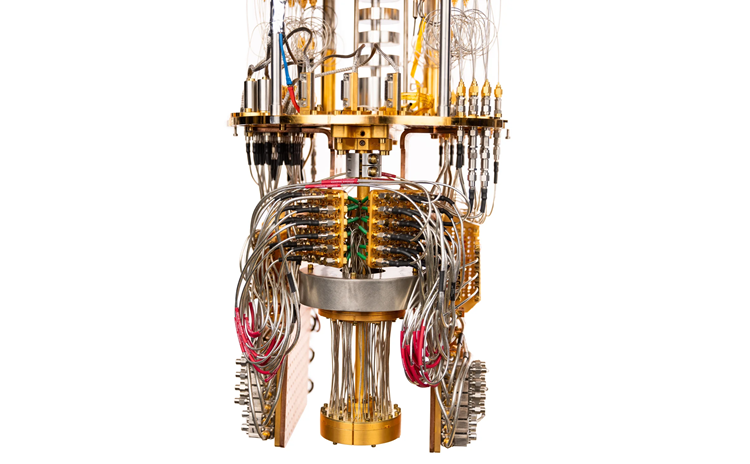
Figure 1. The newest nine-qubit Novera QPU optimized for CZ two-qubit gates. Image Credit: Zurich Instruments AG
In this newest iteration, the nine-qubit chip is engineered for CZ two-qubit gate operations, laid out as a 3 × 3 array with nine tunable transmon qubits and three readout lines. Every qubit is coupled with tunable symmetric couplers in a square lattice.
In LabOne Q, this corresponds to a QPU topology comprising 21 tailored quantum objects (12 tunable coupler objects and nine tunable transmon objects), each with a simple-to-customize set of operations and parameters.
This software is well-suited to both brand-new and experienced researchers seeking a versatile system to investigate novel phenomena or to understand the fundamentals of quantum computing.
Acknowledgments
Produced from materials originally authored by Edward Kluender from Zurich Instruments.

This information has been sourced, reviewed, and adapted from materials provided by Zurich Instruments AG.
For more information on this source, please visit Zurich Instruments AG.